You come out to the garden in the morning and something is wrong. Seedlings are gone. Leaves have ragged holes. Silvery trails streak across soil and foliage.
No visible pest — just the damage.
That’s slugs, and they did all of it overnight.
For the full pest control system:
👉 Garden Pest Control Guide
For organic treatment strategies:
👉 Organic Garden Pest Control
What Slugs Are
Slugs are not insects. They are land-dwelling mollusks, related to clams and snails. They have soft bodies, no shell, and feed using a rasping mouthpart that tears plant tissue.
Because they are not insects, typical insecticides do not work. Slug control requires physical barriers, environmental changes, or targeted bait.
Signs of Slug Damage
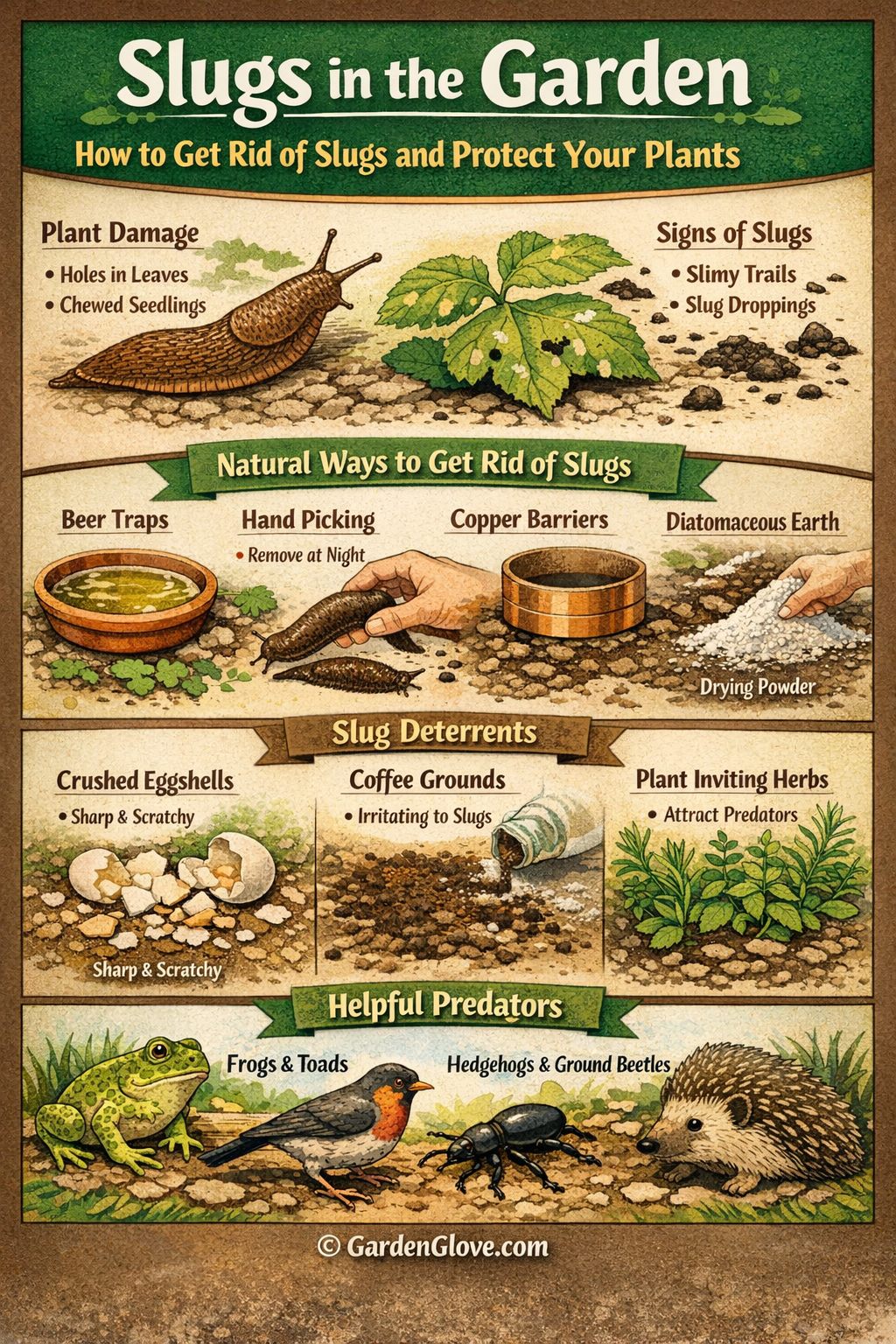
- Large irregular holes: especially along leaf edges
- Missing seedlings: plants gone overnight
- Slime trails: silvery streaks on soil or leaves
- Fruit damage: holes in strawberries or tomatoes
Slug damage appears overnight or after rain, especially in shaded, damp areas.
Plants Most at Risk
- lettuce, spinach, arugula
- kale, cabbage, broccoli
- strawberries
- seedlings of most vegetables
- hostas and other broadleaf ornamentals
Why Slugs Become a Problem
Slugs thrive in moist, shaded environments with plenty of hiding places. Mulch, debris, and dense plant growth create ideal conditions.
Poor drainage and evening watering increase slug pressure significantly.
How to Get Rid of Slugs
Use a combination of methods for best results.
1. Hand-Pick at Night
Go out after dark with a flashlight and remove slugs manually. This is one of the fastest ways to reduce population immediately.
2. Iron Phosphate Bait
Scatter lightly around plants. Slugs stop feeding and die within a few days.
3. Beer Traps
Place shallow containers of beer at soil level to attract and trap slugs.
4. Copper Barriers
Apply copper tape around beds or containers to prevent slug movement.
5. Diatomaceous Earth
Use as a secondary barrier. Reapply after rain for effectiveness.
What Does Not Work Well
- coffee grounds (limited effect)
- eggshells (inconsistent)
- salt (damages soil)
How to Prevent Slugs
- remove hiding places (debris, boards, dense mulch)
- water in the morning, not evening
- improve drainage
- choose mulch carefully
- inspect new plants
Build stronger systems here:
👉 Vegetable Gardening Guide
👉 Raised Bed Gardening Guide
Natural Predators
Birds, frogs, ground beetles, and other wildlife help control slug populations naturally.
A balanced garden ecosystem reduces long-term slug pressure.
Quick Reference
- Seedlings gone → slug feeding
- Slime trails → confirmed presence
- Damage overnight → active population
- Shaded damp areas → high-risk zones