
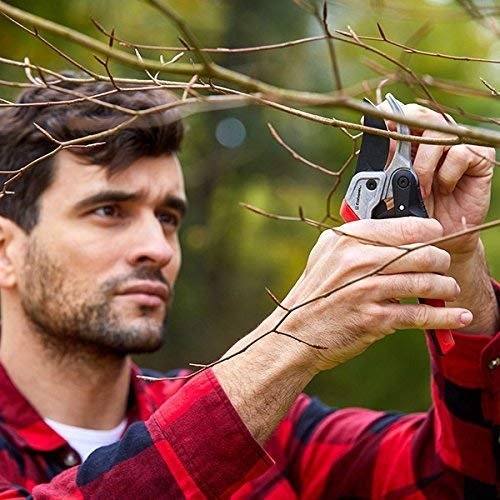
Most gardeners start with bypass pruners. They’re versatile, they make clean cuts on live growth, and they’re what you see everywhere. But the moment you hit your first serious patch of dead wood — old rose canes that snap, dry woody shrub stems, brittle winter-killed branches — a bypass pruner either struggles or forces you into multiple awkward bites just to get through.
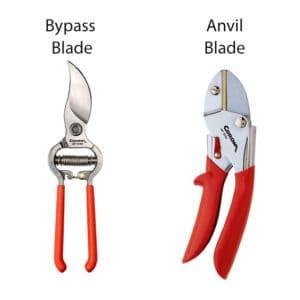
That’s what anvil pruners are built for. The single-blade design drives straight down onto a flat metal plate, the same mechanical logic as an axe hitting a chopping block. On hard, dead, dry wood, they deliver significantly more crushing power for the same amount of hand effort. If you’ve been forcing a bypass pruner through material it wasn’t designed for, using the right anvil pruner will feel like cheating.
The confusion most buyers run into is this: anvil pruners come in standard, ratchet, and premium versions — and picking the wrong style for your hands and workload leads to a tool that ends up in the garage. This guide sorts that out.
What Actually Matters When Choosing Anvil Pruners
Anvil vs. Bypass — Understanding the Trade-Off First
Before spending money on an anvil pruner, it helps to be clear on what the design gives up. The crushing action that makes anvil pruners so effective on deadwood also means the cut is less clean than a bypass cut. On live, green wood, this can damage tissue by compressing the stem rather than slicing it. Anvil pruners are not the tool for fresh roses, green shrub growth, or anything you want to heal quickly and neatly. They’re the specialist — keep a bypass pruner for live work and reach for the anvil on the tough, dry, dead stuff.
Standard vs. Ratchet: The Fork in the Road
This is the decision that matters most, and most buyers don’t think about it until after they’ve bought the wrong tool.
A standard anvil pruner opens fully, you squeeze, and the blade drives down in one motion. It’s faster per cut, and for most people with decent grip strength, it handles branches up to about 3/4 inch without much effort.
A ratchet anvil pruner works in stages — typically two to four incremental squeezes to complete one cut. Each stage ratchets the blade slightly deeper, so you can cut through the same branch with a fraction of the hand pressure. If you have arthritis, carpal tunnel, reduced grip strength, or you’re doing extended pruning sessions that leave your hands fatigued, a ratchet is a genuine solution rather than a compromise.
The trade-off is speed. Ratchet cuts take more total squeezes, which adds up over a long session on lighter material. Think of it this way: standard pruners are faster on easy cuts; ratchet pruners are better on hard ones.
Cutting Capacity — and the Realistic Ceiling
Most anvil hand pruners are rated for 5/8 inch to 1 inch diameter branches. Those numbers assume dry, dead wood that snaps cleanly. Wet wood, green wood, and dense hardwood are harder — a standard pruner rated to 1 inch on ideal deadwood might only cleanly manage 3/4 inch in practice on tougher material.
If you regularly encounter branches over 1 inch, you’re at the boundary between hand pruners and loppers. A hand-sized anvil pruner won’t do that work reliably regardless of brand or price — a pair of anvil loppers is the right tool above that threshold.
Blade Steel and the Anvil Plate
The cutting blade in quality anvil pruners is hardened high-carbon steel — SK5 is common at the mid-range, while Swiss manufacturers like Felco use proprietary hardened alloy. The difference in edge retention between a quality blade and a budget stamped blade is significant over a full season of use.
The anvil plate material also matters. Brass anvil plates, used in the Felco F31, are gentler on the cutting blade than steel-on-steel contact, which extends the sharpness of the main blade over time. Non-stick coatings on both blade and anvil prevent sap adhesion and keep the action smooth throughout a long pruning session.
Replaceable Parts
On a quality anvil pruner, the blade, spring, and anvil plate should be individually replaceable. Felco has built their entire brand around this concept — replacement parts are widely available, well-documented, and affordable. On budget pruners, replacement parts either don’t exist or cost nearly as much as a new tool. If you’re spending more than $30 on a pruner, check whether you can replace the blade and spring. It turns a pruner into a multi-year investment rather than a consumable.
Grip Design and Hand Fit
Anvil pruners close with more impact than bypass models — the blade driving down onto the plate creates a physical shock that you feel in your palm over dozens of cuts. Quality tools absorb this with cushioned grips and shock-dampening hardware. Budget tools transfer that impact directly, which becomes noticeable after 20 minutes of work.
Some pruners are designed for larger hands (Felco’s F31 explicitly), while others are more compact. If you’re buying without handling in person, it’s worth checking grip span and user reviews before committing.
The Best Anvil Pruners
1. Fiskars Power-Lever Anvil Pruner
Best Overall / Best for Beginners | ~$17–$20
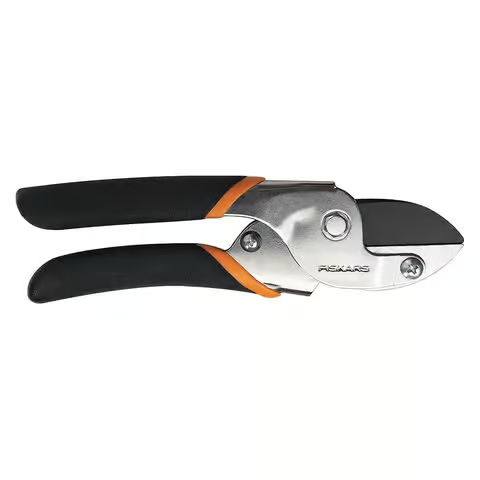
The Fiskars Power-Lever Anvil Pruner is the easiest recommendation I can make for someone who wants a reliable anvil pruner without overthinking it. The Power-Lever mechanism — a four-point pivot system — compounds your cutting force so that squeezing feels noticeably easier than a traditional single-pivot design. For 5/8-inch capacity on dry deadwood, the effort required is minimal.
The blade is fully hardened steel with a non-stick, rust-resistant coating that handles sap without gumming. All-steel construction means the body won’t crack or flex under pressure, and the grip is comfortable and ambidextrous.
At under $20 and backed by a lifetime warranty, this is the value benchmark everything else has to beat. It doesn’t have replaceable parts (the tool is inexpensive enough that replacement is the practical option), and the 5/8-inch capacity is on the modest side for thick woody stems. But for cleaning up dead perennials, removing winter-killed shrub growth, and general deadwood maintenance, it handles the job cleanly season after season.
Best for: Homeowners, beginners, light-to-medium dead wood removal.
2. Felco F31 Anvil Pruner
Best Premium Option | ~$80–$90
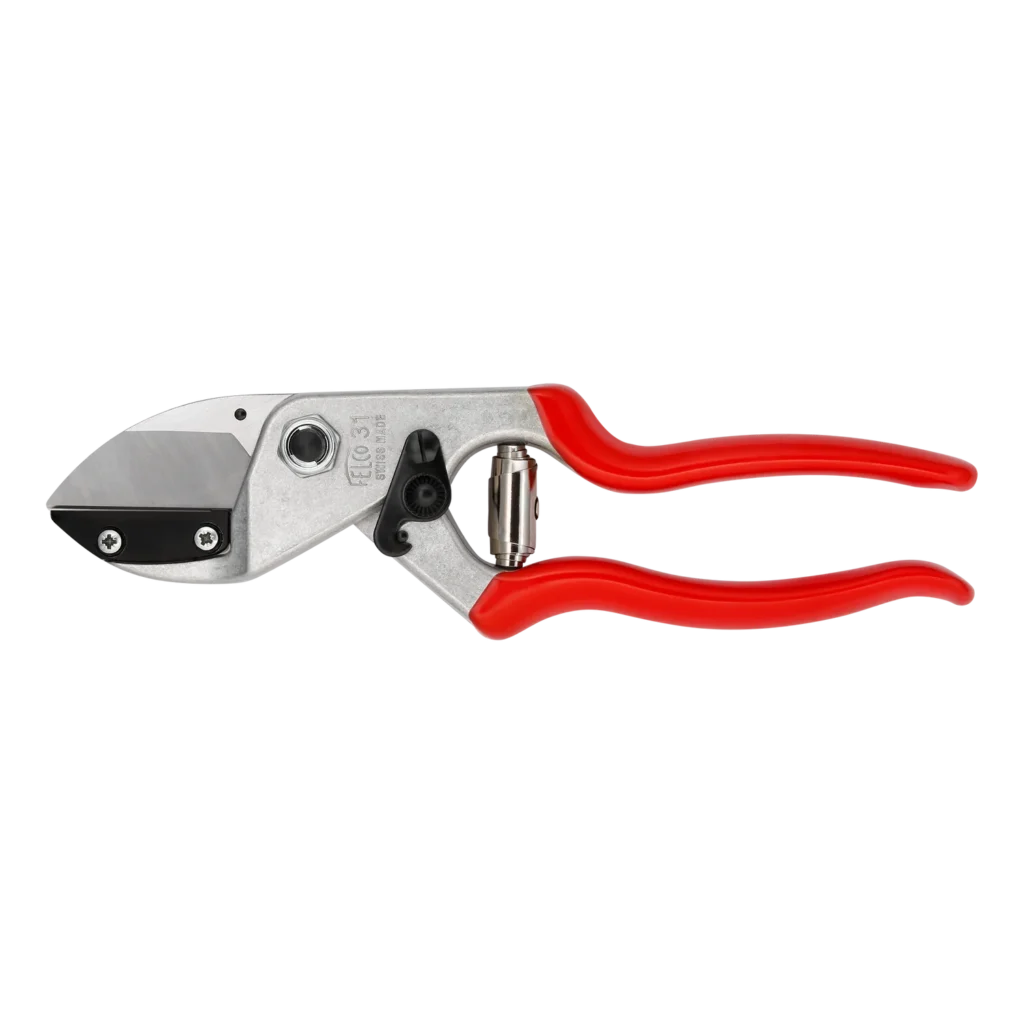
Felco makes one anvil pruner, the F31, and they got it right. It’s Swiss-made, with forged aluminum handles, a hardened steel blade beveled on both sides, and a screw-mounted adjustable brass anvil plate. That brass anvil is the detail that separates it from everything else at this price — blade-on-brass contact is far gentler on the cutting edge than steel-on-steel, meaning the F31 stays sharper longer between sharpening sessions.
Cutting capacity is 1 inch on dry deadwood, and the tool genuinely reaches that number in practice. On old hardwood rose canes, thick woody perennial stems, and overgrown shrub branches, it cuts cleanly and with authority. The balance and weight (7.9 oz) feel comfortable in hand, and the ergonomic grip distributes squeeze force well.
Every component is replaceable: blade, spring, anvil plate, pivot screw. Felco replacement parts are available widely, the manuals for disassembly are clear, and the total cost of maintenance over a decade of regular use puts the price-per-year well below what you’d spend cycling through budget pruners.
The honest trade-off: the F31 is designed for larger hands. Smaller-handed gardeners sometimes find the grip span uncomfortable on extended sessions. And at $80+, it’s a deliberate purchase — not a grab-it-off-the-shelf tool.
Best for: Serious gardeners, professional users, fruit tree and orchard work, anyone who wants a tool they won’t replace for 15 years.
3. Gardena Classic Anvil Pruner (8855)
Best Mid-Range Option | ~$28–$35
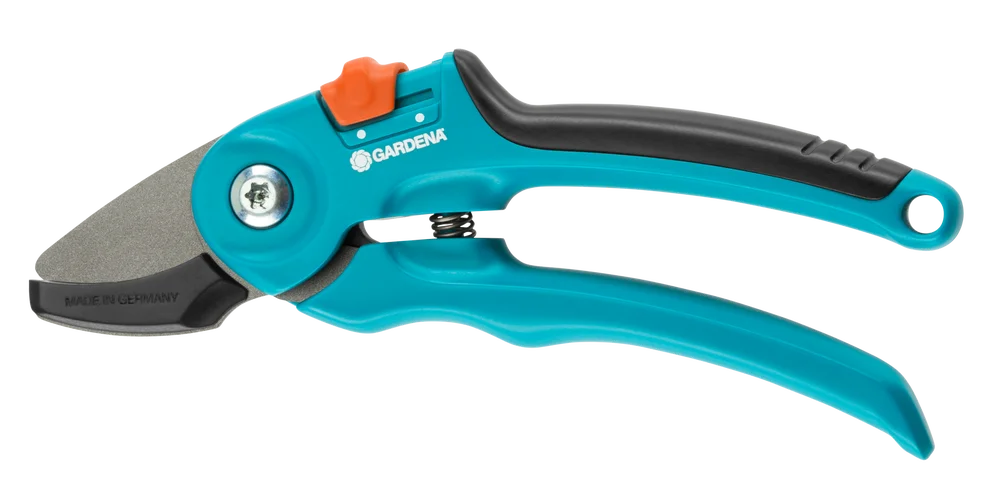
The Gardena 8855 occupies a genuinely useful middle ground between the disposable-but-capable Fiskars and the investment-grade Felco. Made in Germany, it features precision-ground non-stick blades, a fiberglass-reinforced handle, and a curved ergonomic grip that distributes hand pressure better than a straight handle. Cut capacity is 18mm (just under 3/4 inch) on dry wood.
What makes the Gardena stand out at this price is the build quality of the pivot and the handle comfort. The curved handle isn’t just cosmetic — it changes the angle of the squeeze in a way that puts more force through the blade with less strain on the wrist. After a long pruning session, the difference between a Gardena and a straight-handled budget tool is real.
The trade-off: 3/4-inch capacity puts it a step behind the Felco on thick deadwood. And while build quality is good, replacement parts aren’t as universally available as Felco’s ecosystem. Still, for a homeowner doing regular seasonal cleanup on deadwood, this is a well-made tool that punches above its price.
Best for: Regular gardeners who want German-made quality without the Felco price, moderate dead wood volumes, extended pruning sessions.
4. Gardena SmartCut Ratchet Anvil Pruner (8798)
Best Ratchet Pruner | ~$45–$55
The Gardena SmartCut is the ratchet anvil pruner I’d recommend to anyone dealing with hand strength issues, arthritis, or simply a lot of pruning to get through. The ratchet mechanism delivers roughly twice the effective cutting force per squeeze compared to a standard anvil pruner — which makes a meaningful difference on harder wood at the top of the 1-inch capacity range.
The two-handle-position design is one of the SmartCut’s distinguishing features. You can shift your grip mid-session depending on fatigue or the angle of the cut, which extends usable time before your hands tire. The angled cutting head makes close-to-trunk cuts more natural, and a single-hand safety lock closes the tool cleanly for storage. Precision-ground non-stick blades, aluminum handles, and a 25-year warranty round out a well-engineered package.
The trade-off is pace. Multiple stages per cut slow you down compared to a standard pruner on the same branch. If you’re doing a high volume of cuts on lighter material, a standard pruner will feel more efficient. The SmartCut earns its place on thicker, harder branches where each cut demands real force regardless of which tool you’re using.
Best for: Gardeners with arthritis or reduced grip strength, extended pruning sessions on thick deadwood, anyone who wants maximum cutting power without moving up to loppers.
5. Corona RP 3230 Ratchet Anvil Pruner
Best for Limited Hand Strength on a Budget | ~$16–$22
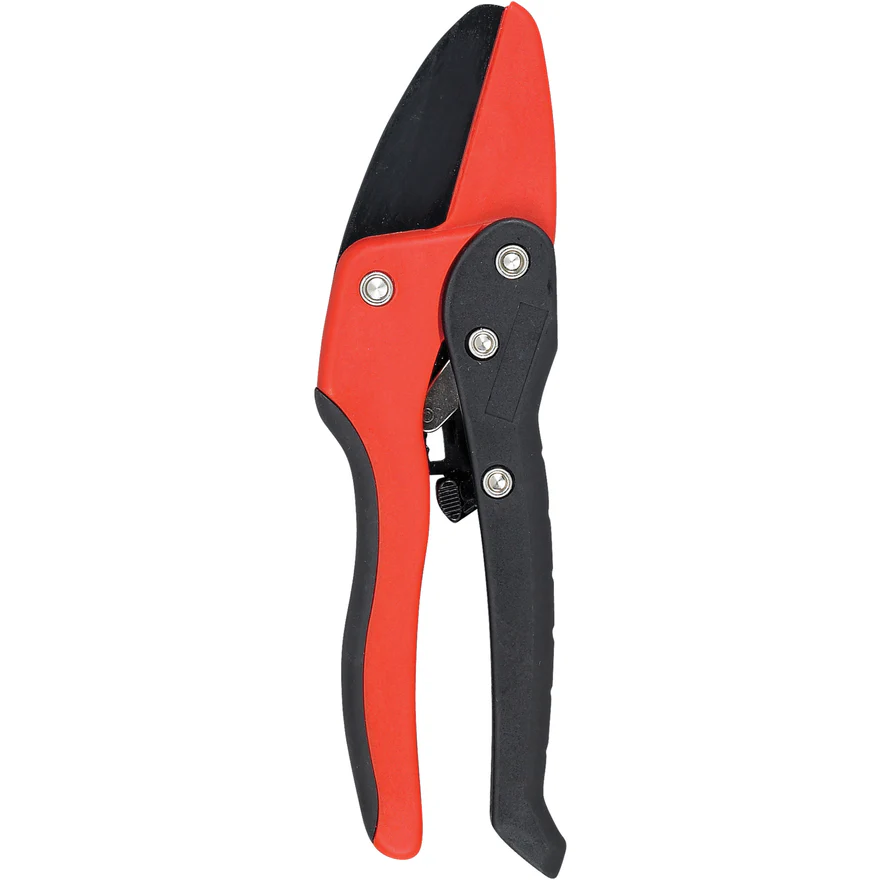
Corona has been making garden tools in the US since the 1920s, and the RP 3230 is one of their most consistently recommended products. It’s a ratchet anvil pruner with a 3/4-inch cut capacity, a non-stick coated high-carbon steel blade, and a power-multiplying ratchet action that lets you work through branches in incremental squeezes rather than one hard close.
What sets it apart at this price point is its availability and backing. You can pick it up at Home Depot, Walmart, or Amazon, and it comes with a lifetime warranty — rare for a tool under $20. The molded grip is designed to fit both right- and left-handed users of all hand sizes, the stainless steel rivet construction is solid, and the squeeze-to-release safety lock works reliably.
The trade-off is the 3/4-inch capacity ceiling. On hard, dense deadwood at that diameter, you’ll feel the ratchet working hard. It’s not the tool for thick old woody stems — that’s where the Gardena SmartCut earns its premium. But for the majority of dead-wood cleanup tasks around a typical home garden, the Corona gets the job done cleanly, costs less than a meal out, and won’t end up in the trash after one season.
Best for: Budget-conscious gardeners, beginners, seniors, and anyone with reduced grip strength handling light-to-medium deadwood.
Quick Comparison
| Tool | Style | Cut Capacity | Replaceable Parts | Price (approx.) |
|---|---|---|---|---|
| Fiskars Power-Lever Anvil | Standard anvil | 5/8 in. | No | ~$18 |
| Felco F31 | Standard anvil | 1 in. | Yes (all parts) | ~$85 |
| Gardena Classic | Standard anvil | 3/4 in. | Limited | ~$30 |
| Gardena SmartCut | Ratchet anvil | 1 in. | Limited | ~$50 |
| Corona RP 3230 | Ratchet anvil | 3/4 in. | No | ~$18 |
Best Choice by Use Case
For beginners and casual gardeners: The Fiskars Power-Lever Anvil Pruner is the right starting point. It’s inexpensive, widely available, backed by a lifetime warranty, and the Power-Lever mechanism makes it more capable than its price suggests. If you eventually outgrow it, you haven’t lost much.
For serious or regular gardening: The Felco F31 is the long-term investment. Replaceable parts, Swiss blade quality, and a brass anvil plate make it a tool you buy once and maintain. Fruit tree growers, orchardists, and anyone who prunes regularly will get the full value out of it.
For a mid-range sweet spot: The Gardena Classic 8855 is the pick. Better build quality than budget pruners, more comfortable ergonomics, and German manufacturing — without the premium Felco price.
For limited hand strength on a budget: The Corona RP 3230 is the pick — ratchet action, lifetime warranty, available everywhere, and priced under $20.
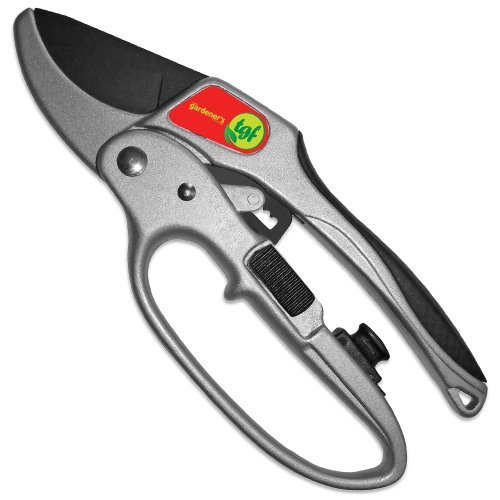
For limited hand strength on a budget: The Gardener’s Friend delivers multi-stage ratchet action, a replaceable blade, and a thoughtful design at a price that removes the risk from the decision.
One Thing Most Buyers Overlook
Anvil pruners work best when the blade is sharp. A dull blade on an anvil design doesn’t just cut poorly — it crushes and tears rather than severing cleanly, which damages the branch stub and the tissue around it. If your anvil pruner starts feeling like it’s mashing through wood instead of cutting it, that’s a sharpening job, not a sign to replace the tool. Running a small diamond file or whetstone along the blade at roughly a 20-degree angle takes about two minutes and restores the edge.
Also: wipe the blade down after each session. Sap that dries on the blade makes every subsequent cut harder and eventually pits the steel. A quick wipe with a damp cloth or a drop of household oil keeps the tool cutting at full capacity all season long.