
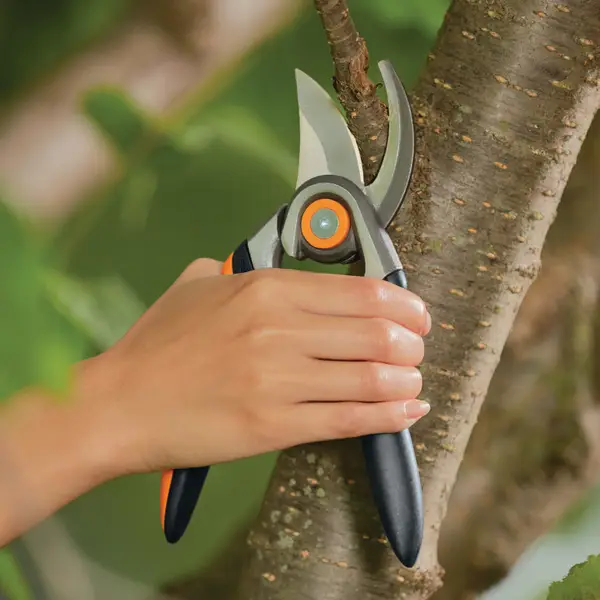
Most gardeners don’t need to spend $70 on pruning shears. A well-designed tool at $15 to $30 will handle the majority of home garden work without complaint — and there are genuinely good options at that price that won’t fall apart after two seasons.
The problem is that “budget pruning shears” covers a wide range: from cheap stamped-steel tools that dull after a few sessions to surprisingly capable pruners that punch well above their price. Knowing what separates a good budget buy from a waste of money makes the difference between a tool you’ll use every season and one that ends up at the bottom of a garden shed drawer.
This guide covers the best budget pruning shears available right now — practical, honest picks for gardeners who want solid performance without a significant investment.
What to Expect — and What to Sacrifice — at a Budget Price
Before getting into specific tools, it helps to be honest about what the budget tier gives you and what it doesn’t.
What you get: A sharp blade out of the box, reliable spring action for light-to-moderate work, basic bypass or anvil cutting geometry, and a tool that handles the everyday tasks most home gardeners face — deadheading, trimming roses, cutting perennial stems, light shrub maintenance.
What you give up: The blade steel in budget pruners is almost always stamped rather than forged. Stamped steel comes sharp but dulls faster than forged steel and is harder to resharpen effectively. Most budget pruners also don’t have replaceable parts — when the blade wears out or the spring breaks, you replace the whole tool. At $15, that’s not a financial disaster. It is, however, something to factor in over several seasons.
The sweet spot: At $20–$30, a handful of tools cross into forged construction or meaningfully better blade steel while still being firmly affordable. The Corona ClassicCut at the end of this list is the prime example — it’s genuinely a step up in quality, and it’s cheap enough that most gardeners will consider it accessible.
What to Look For in Budget Pruning Shears
Blade Steel
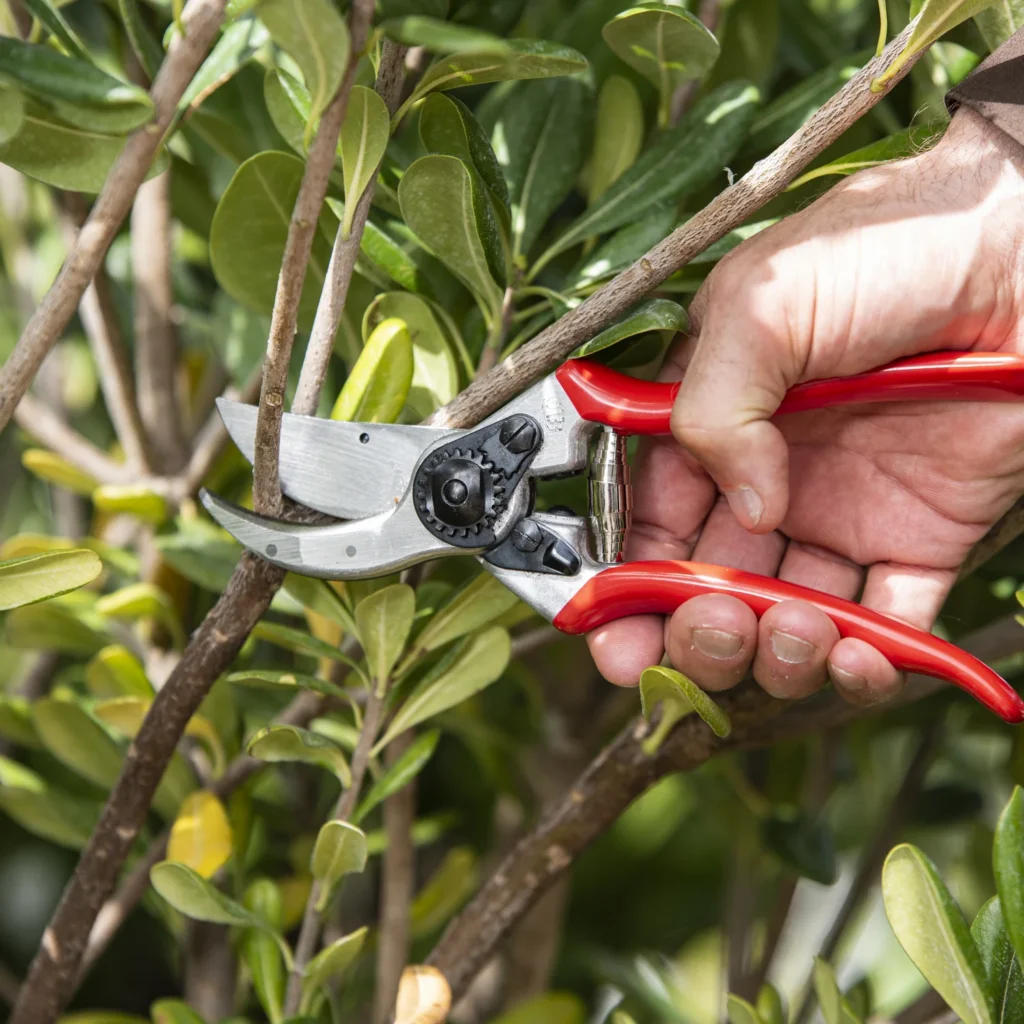
Hardened steel is the minimum worth buying. Most budget pruners use hardened carbon steel or alloy steel — it’s a reasonable starting point that holds an edge through moderate use. SK5 high-carbon steel is a step up from generic alloy steel and is found in a few sub-$20 tools; it holds an edge longer and tolerates resharpening better.
Non-stick coatings (Teflon, titanium, chrome) reduce sap adhesion and help the blade resist rust. They’re a useful feature at any price, but keep in mind they wear off over time — especially with sharpening. The underlying steel quality matters more in the long run.
Grip and Ergonomics
Budget tools sometimes skimp on grip quality, and it shows after 20 minutes of continuous work. Look for soft-touch or cushioned grips if you’ll be pruning for extended sessions. Spring tension matters too — a spring that’s too stiff causes hand fatigue quickly. Most brands land in an acceptable range, but it’s worth checking user reviews if you have any hand strength concerns.
Safety Lock
Every pruner should have a safety lock that keeps the blade closed during transport and storage. On budget tools, this is sometimes a flimsy clip that loosens over time. It’s a small thing, but a lock that fails means a blade rattling around loosely in a tool bucket — worth checking reviews for.
Warranty
A lifetime warranty from a well-established brand is worth more on a $15 tool than a 12-month warranty on a $25 one. Fiskars’ lifetime warranty on their budget pruners is genuinely useful, and the brand is large enough that claims are honored. Smaller brands offering “limited lifetime warranties” vary considerably in what that actually means in practice.
The Best Budget Pruning Shears
1. Fiskars Classic Bypass Pruning Shears
Best Under $15 | ~$13–$15
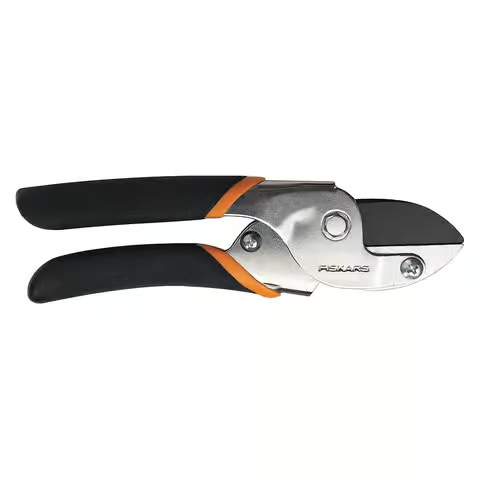
The Fiskars Classic is one of the best-selling pruning shears in the US for a simple reason: at $13, it works. The fully hardened precision-ground steel blade comes sharp and holds that edge through a season of light-to-moderate use. The low-friction non-stick coating reduces sap buildup and makes cleanup straightforward. The self-cleaning sap groove keeps the blade moving freely on sticky stems, the grip is ambidextrous, and the slide lock works one-handed.
Cut capacity is 5/8 inch — sufficient for thin to medium stems, green perennials, roses, and light shrub work. At this price, this is what it is: an honest, capable tool for casual and seasonal gardeners, backed by a lifetime warranty from a brand that stands behind its products.
The trade-off is the ceiling. The stamped steel blade isn’t worth resharpening once it dulls, and there are no replacement parts. When it wears out, you buy another one. That’s a perfectly reasonable proposition at $13, but gardeners who prune regularly and want something that lasts several seasons should step up to the Corona or one of the SK5-blade options below.
Best for: Beginners, light-duty gardeners, anyone who wants a dependable backup pruner or a grab-and-go tool.
2. Fiskars SoftGrip Bypass Pruner
Best Budget Pruner for Comfort | ~$15–$18
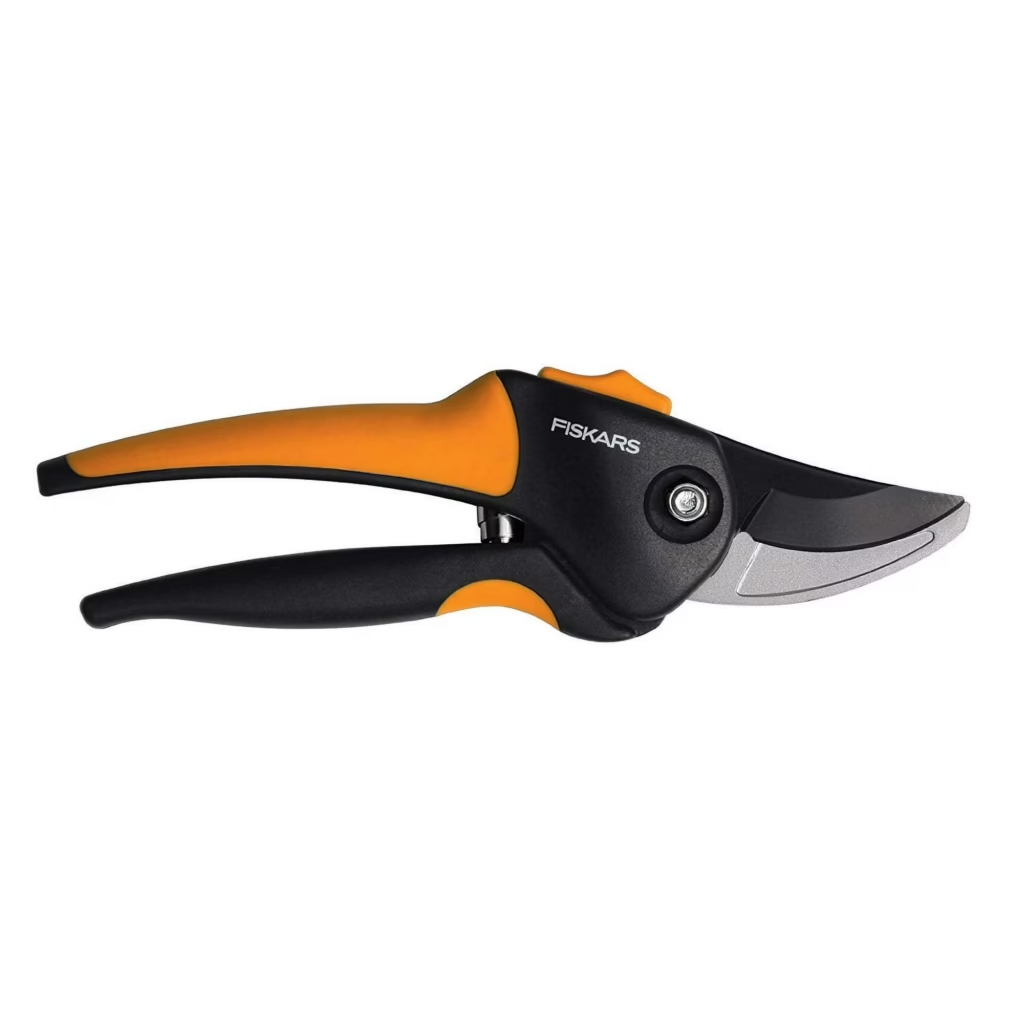
The SoftGrip is Fiskars’ step-up over the Classic, and the upgrade is worthwhile for gardeners who put in longer sessions. The handle adds cushioned SoftGrip touchpoints at the palm and forefinger contact points — the spots that develop pressure fatigue first on harder plastic grips. The blade is the same precision-ground hardened steel with a low-friction coating, and the DuraFrame construction is lighter than the all-steel Classic while being equally strong.
Cut capacity on the standard SoftGrip is 5/8 inch. If you want more reach, Fiskars also makes a Large SoftGrip version (3/4 inch capacity) with longer handles designed for medium-to-large hands, and a smaller version specifically designed for smaller hands. The smaller-hand version is a genuinely useful option that most other budget brands ignore.
The trade-off is the same as the Classic: stamped steel blade, no replacement parts, not worth resharpening once dull. But at $15–$18, the comfort upgrade over the Classic is real, and if extended pruning sessions leave your hands tired, the SoftGrip handles make a noticeable difference.
Best for: Gardeners who prune regularly, anyone who experiences hand fatigue, users with smaller hands who want a properly sized tool.
3. gonicc 8″ Professional Titanium Bypass Pruning Shears (GPPS-1003)
Best Online Budget Pick | ~$14–$20
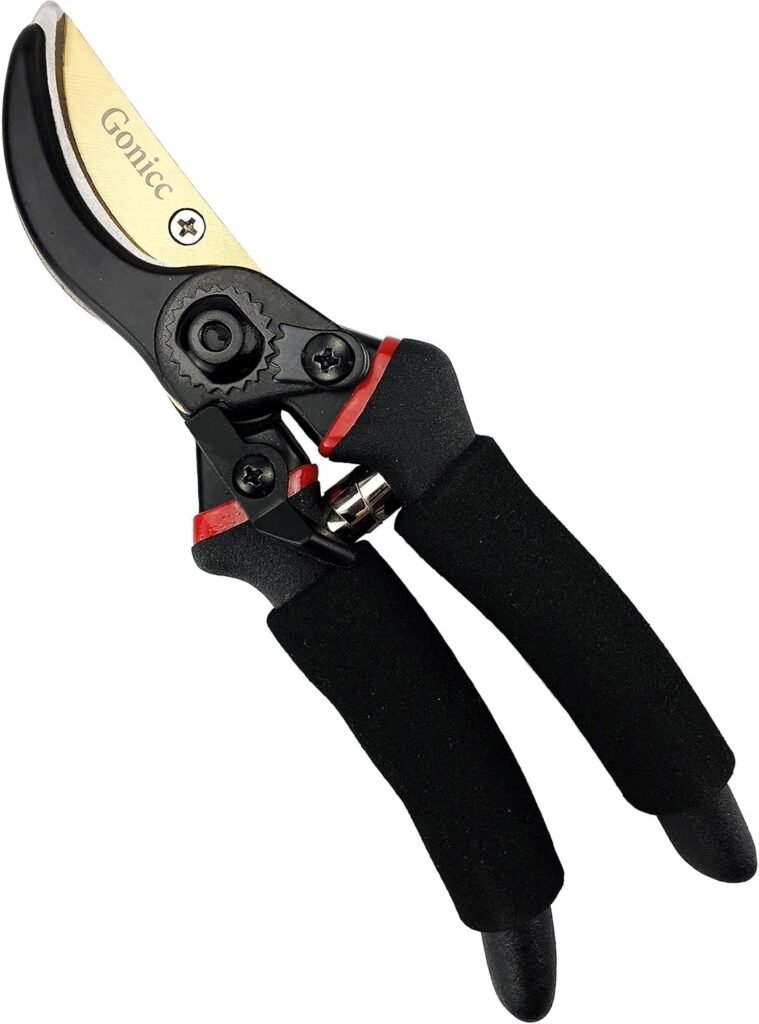
The gonicc GPPS-1003 is consistently one of the top-selling pruning shears online, and the sheer volume of reviews — tens of thousands — gives you a more reliable read on the product than most garden tools at this price. The titanium-coated SK5 high-carbon steel blade is the key feature: SK5 offers meaningfully better edge retention than the generic alloy steel used in most budget pruners, and the titanium coating reduces friction and sap adhesion.
The drop-forged body and handles are sturdier than the price suggests, and the one-handed safety lock releases and engages easily — something some more expensive tools get wrong. Cut capacity is 3/4 inch, a step up from the Fiskars Classic, and the ergonomic grips work for most hand sizes.
The trade-off: the gonicc is not a forged tool despite the sturdy feel, and the titanium coating will wear off with extended use and sharpening. Replacement parts aren’t available. When it eventually wears out, you replace it. For the price, that’s a fair deal — this is a better-built tool than most of what’s available under $20, with blade steel that outlasts the Fiskars’ stamped construction.
Worth noting: the gonicc line has several similar-looking models. The GPPS-1003 titanium is the flagship. The GPPS-1002 uses standard high-carbon steel without the titanium coating — both work well, but the 1003 is the better long-term value for a few dollars more.
Best for: Online shoppers who want better blade quality than a stamped-steel budget tool, casual to regular home gardeners.
4. Tabor Tools S3A Classic Bypass Pruner
Most Features for the Money | ~$14–$16
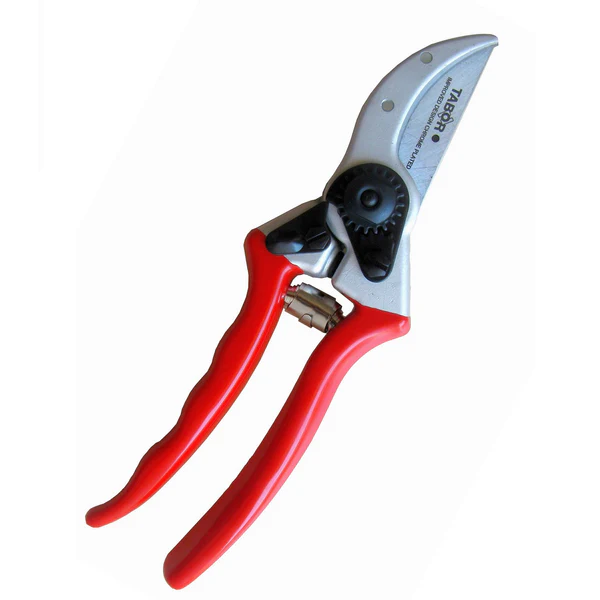
The Tabor Tools S3A is a sub-$16 bypass pruner that includes features you’d typically expect from tools twice its price. The micrometric adjustment knob lets you manually align the cutting blade for more precise cuts — a feature found on the Felco F2 and other professional tools, rare at this price point. There’s also a sap groove to prevent blade sticking on resinous wood and a wire-cutting notch for light wire work without damaging the blade edge. The embedded shock-absorbing spring cushions the impact of each cut, which reduces hand fatigue on longer sessions.
The blade is hardened chrome-plated steel, the handles are bright red (useful for finding dropped tools in the garden), and the pivot bolt is accessible enough to remove for cleaning and sharpening. Cut capacity is 3/4 inch.
The trade-off — and it’s a real one — is the safety latch. Multiple reviewers note that the latch can work itself down during use, interfering slightly with the cutting action. It’s a minor annoyance rather than a functional failure, but it’s worth knowing going in. The tool has a 12-month conditional warranty rather than a lifetime warranty, which is shorter coverage than Fiskars offers.
For the price, the combination of micrometric adjustment, sap groove, wire notch, and a resharpenable blade makes this the most feature-rich budget pruner on the list. If you want professional-grade details without the professional price, the S3A delivers.
Best for: Gardeners who want the most capability per dollar, anyone who values precision cutting features at a budget price.
5. Corona ClassicCut Forged Bypass Pruner
Best Stretch Budget Pick | ~$20–$30
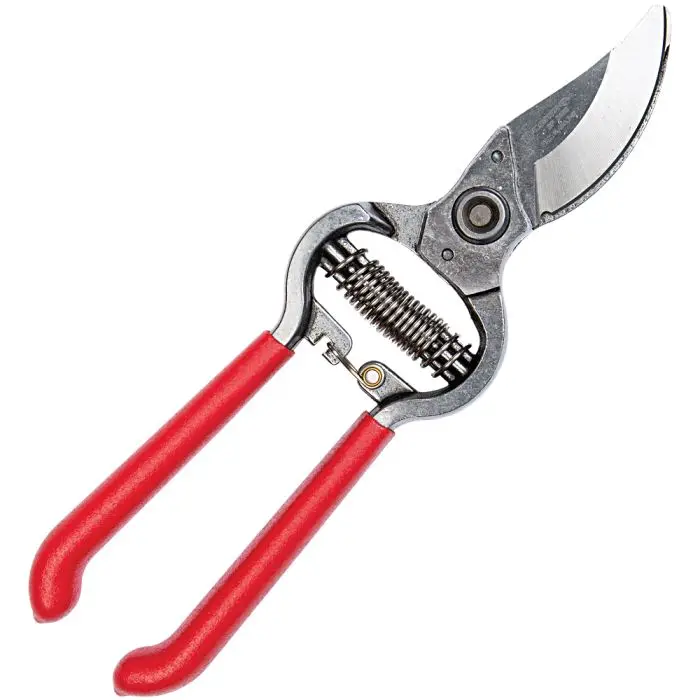
The Corona ClassicCut is the tool on this list that crosses from “budget” into “genuinely good” — and it does it at a price most gardeners will still consider accessible. Made with MaxForged high-carbon steel — the same forging process used on professional tools — and hand-matched blade and hook for precision, it’s a different class of tool than the stamped and coated options above it on this list.
What forged construction gives you in practice: the blade is denser and holds a sharper edge longer. More importantly, it can be resharpened season after season with a whetstone or diamond file. Combined with Corona’s replacement parts availability, the ClassicCut becomes a multi-year investment rather than a consumable. The built-in sap groove channels debris away from the cutting surface, and the curved blade reduces cutting effort with each squeeze.
The BP 3130 (3/4 inch cut capacity, slightly smaller) and BP 3160 (3/4 inch, full size) are both solid options — the 3130 is slightly easier to maneuver in tight spaces, while the 3160 suits medium-to-large hands better.
The trade-off is that the lock mechanism takes a bit more effort to engage one-handed compared to the Fiskars tools, and the handle design works best for medium-to-large hands. Neither is a dealbreaker, but they’re worth knowing.
At $25–$30, the Corona sits at the top of the budget range. If you’re willing to spend a few dollars more for a tool you can sharpen and maintain over multiple seasons, this is the most sensible buy on the list.
Best for: Gardeners who want a long-lasting forged tool on a limited budget, regular pruners who want a blade they can maintain, anyone ready to graduate from disposable budget pruners.
Quick Comparison
| Tool | Cut Capacity | Blade | Replaceable Parts | Warranty | Price (approx.) |
|---|---|---|---|---|---|
| Fiskars Classic (391091) | 5/8 in. | Hardened stamped steel | No | Lifetime | ~$14 |
| Fiskars SoftGrip | 5/8–3/4 in. | Hardened stamped steel | No | Lifetime | ~$17 |
| gonicc GPPS-1003 | 3/4 in. | SK5 titanium-coated | No | Limited lifetime | ~$17 |
| Tabor Tools S3A | 3/4 in. | Hardened chrome steel | No | 12 months | ~$15 |
| Corona ClassicCut BP 3160 | 3/4 in. | MaxForged carbon steel | Yes | Lifetime | ~$28 |
Best Choice by Use Case
For the absolute lowest spend: The Fiskars Classic (391091) does what it says on the box for under $15, backed by a lifetime warranty. A completely reasonable starting point.
For comfort on a budget: The Fiskars SoftGrip adds cushioned grip ergonomics for a few dollars more. If hand fatigue is a concern, or you have smaller hands and want a properly sized tool, the SoftGrip is the smarter Fiskars buy.
For the best blade quality under $20: The gonicc GPPS-1003 edges out the Fiskars tools on blade steel. SK5 with titanium coating holds its edge longer — worth the extra few dollars for anyone who prunes more than occasionally.
For the most features per dollar: The Tabor Tools S3A packs in micrometric adjustment, a sap groove, and a wire notch at under $16. If you want professional-style features without the professional price, nothing else on this list competes at that price point.
For a tool that lasts: The Corona ClassicCut is the buy-once option on this list. Forged steel, a resharpenable blade, and replacement parts mean it can outlast three or four rounds of the cheaper tools above it. If you’re willing to spend up to $30, this is where your money does the most long-term work.
How to Get More Life Out of a Budget Pruner
Budget blades dull faster than forged ones, but a little maintenance goes a long way.
Clean after every session. Sap that dries on the blade increases friction on every subsequent cut and gradually pits the steel. A quick wipe with a damp cloth — or a drop of WD-40 on the blade — takes 30 seconds and noticeably extends blade life.
Sharpen when it starts tearing. A bypass pruner that tears rather than cuts cleanly needs sharpening, not replacement. On a budget stamped-steel pruner, sharpening is less effective than on forged steel but still buys you time. A few passes of a small diamond file on the beveled edge at roughly 20 degrees is enough to restore a working edge. On the Corona’s forged blade, regular sharpening means the tool can last indefinitely.
Don’t cut what the tool isn’t rated for. Forcing a 5/8-inch pruner through a 1-inch branch bends the blade and stresses the pivot. It’s the single fastest way to shorten the life of a budget tool. If you’re regularly hitting branches beyond 3/4 inch, a pair of loppers is the right tool — no budget pruner handles that work reliably.