
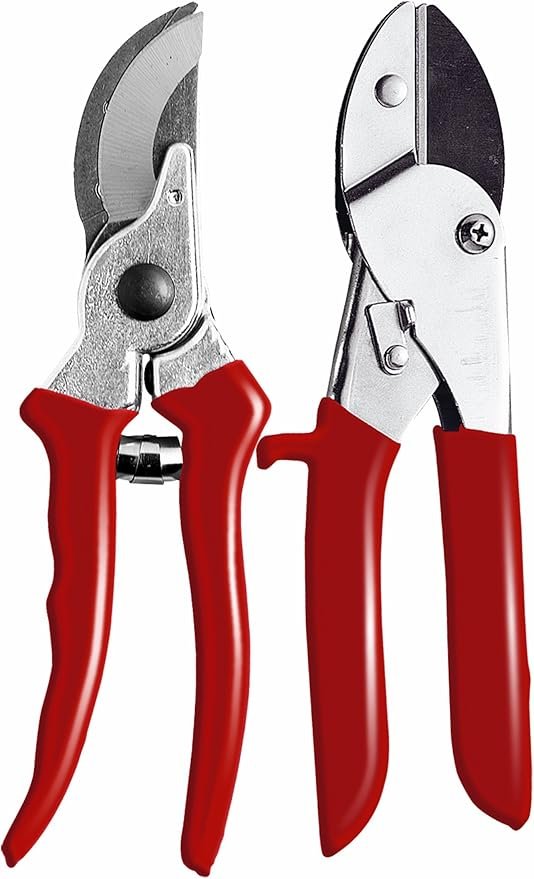
Every gardener eventually encounters this question—usually mid-pruning session when something isn’t cutting the way it should. The short answer is that neither is better overall, because they solve different problems. The longer answer is that using the wrong one for a specific task produces genuinely worse outcomes—damaged plant tissue, excessive hand effort, or both. Understanding the bypass vs anvil pruners distinction makes every subsequent pruning decision clearer. For a complete overview of all types, see our guide on the best pruning shears. These are the primary types of pruning shear blades used in modern gardening.
The Mechanical Difference—What Actually Happens at the Cut
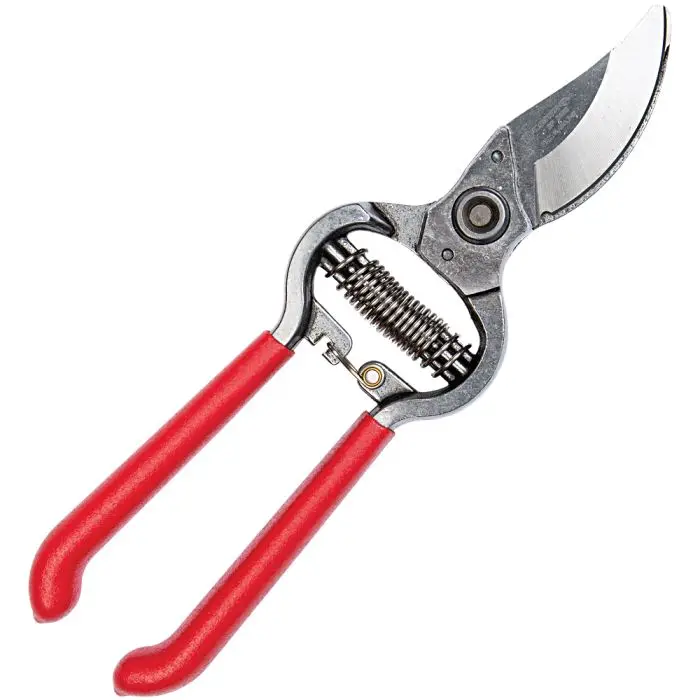
Bypass: Slicing Action
A bypass pruner works like scissors. The sharpened cutting blade passes alongside a counter blade—the plant stem is caught between them and sliced. The cutting blade draws through the stem tissue from one side as the counter blade provides resistance from the other. This mechanism is the core of the best bypass pruning shears, favored for their clean, surgical cuts.
What remains: a flat, clean cut surface where cell walls are severed rather than crushed. The cambium—the ring of actively dividing cells beneath the bark—is intact at the cut margin and begins wound closure immediately. what loppers are used for is a common comparison when stems exceed hand pruner capacity.
Anvil: Compression and Severance
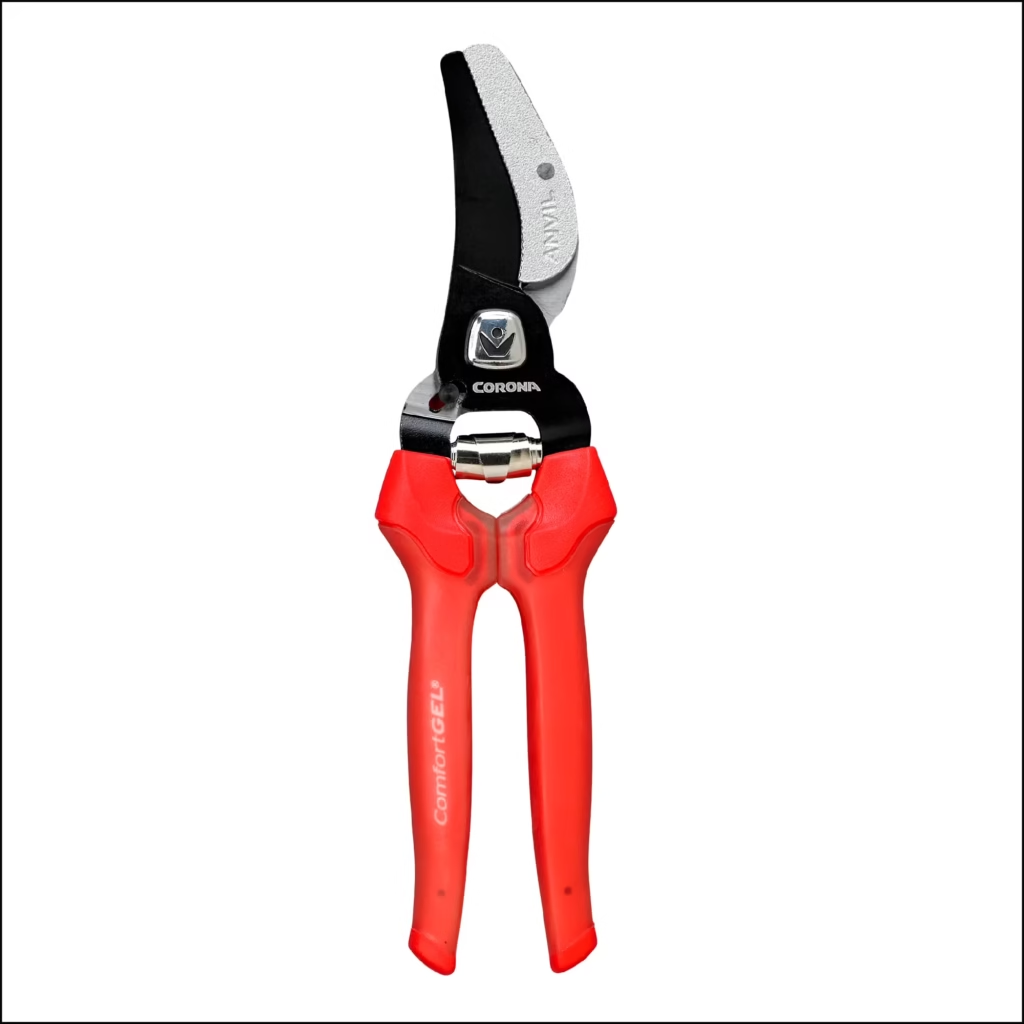
An anvil pruner drives a single blade straight down onto a flat metal plate. The stem is compressed between blade and anvil until it severs. The mechanism generates more force per hand squeeze than bypass because both sides of the stem are being compressed simultaneously—the force isn’t split between two opposing blades, it’s concentrated at the cutting edge. You can find top-rated examples in our guide to the best anvil pruners.
What remains: a cut where the tissue around the cut margin has been compressed before severance. On live wood, this damages the cambium zone and slows healing.
Why This Mechanical Difference Matters for Plant Health
The cambium’s role in wound healing makes the bypass vs anvil distinction biologically significant on live wood.
When a bypass blade slices cleanly through a stem, the cambium cells at the cut edge are severed in intact condition. They respond to the wound signal immediately—callus tissue forms, the wound closes, disease entry is minimized. This is why bypass tools are the best pruning shears for roses, where preventing dieback is critical.
When an anvil blade compresses the stem, the cambium across a zone around the cut is damaged before the blade reaches it. The wound closure response starts from a position of damaged tissue rather than intact tissue. Healing is slower, less complete, and the wound remains exposed for longer.
When to Use Each
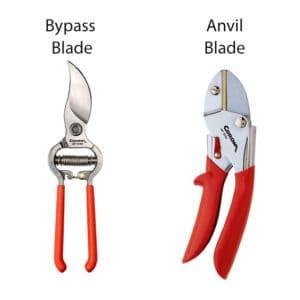
Use Bypass When:
- Cutting live, actively growing stems and branches
- Pruning roses, fruit trees, established shrubs
- Making precision cuts where placement matters—bud-directed cuts, collar cuts, deadheading
- Cut quality and plant health are priorities
Use Anvil When:
- Cutting dead, dry, or very hard woody material
- Removing dead stems where cambium preservation is irrelevant
- Cutting material at the upper limit of hand pruner capacity where anvil’s force advantage matters
- Managing arthritis or grip strength limitations—anvil requires less hand force for equivalent cutting
Ratchet Anvil—the Important Third Option

A ratchet anvil pruner adds a staged cutting mechanism to the standard anvil design. Instead of requiring one continuous squeeze to sever a branch, the ratchet allows you to cut in stages. Each partial squeeze clicks the mechanism forward, holding the blade in place while you reset your hand for the next squeeze. This reduces the peak force required per cut, making it the best pruning shears for arthritis or reduced hand strength.
For more details on specific models, explore our guides on the best professional pruning shears and best budget pruning shears.