Every raised bed gardening failure I’ve investigated starts with the same root cause: soil mix. Not watering, not spacing, not pest pressure — the growing medium. A raised bed filled with bulk topsoil that wasn’t quality-checked. A bed filled with pure multi-purpose compost that collapsed and compacted by midsummer. A bed of the correct mix but in a ratio that didn’t suit the crops being grown.
The raised bed soil mix question has a specific, well-tested answer, and getting it right before filling means the bed works from the first planting rather than being diagnosed and remediated across subsequent seasons (this connects directly to how raised beds function as a system: /raised-bed-gardening-guide/).
Why Raised Beds Need a Specific Soil Mix
A raised bed is a contained growing environment — the soil inside it doesn’t connect to the wider soil system. That means everything — drainage, fertility, structure — depends entirely on what you put into the bed.
The correct raised bed mix must balance:
- drainage
- moisture retention
- fertility
These forces pull in different directions. The mix is what balances them (this is the same underlying principle behind productive soil in general: /best-garden-soil/).
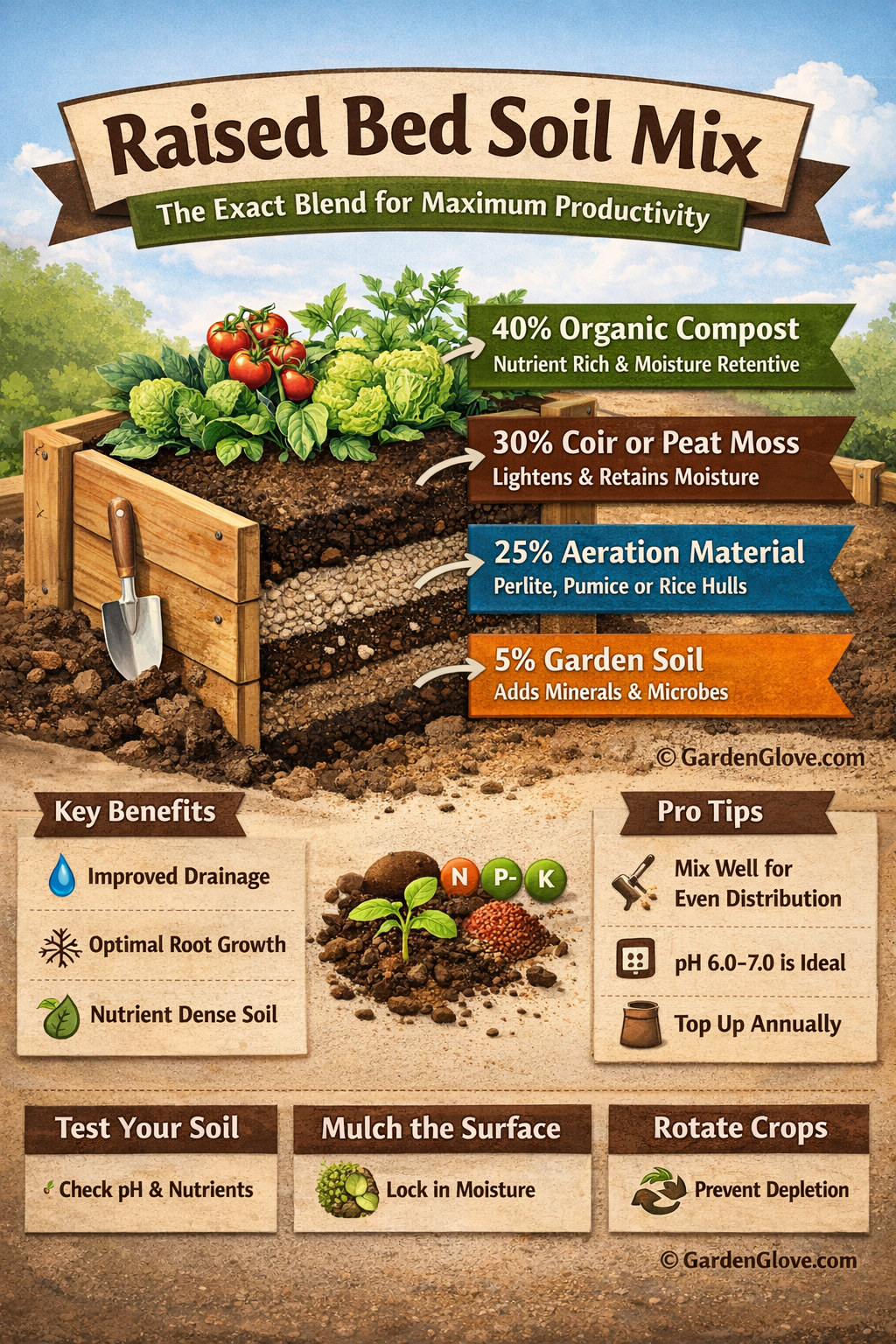
The Standard Mix — The Equal-Thirds Foundation
The widely recommended starting point:
- one third topsoil
- one third compost
- one third grit or perlite
This creates a stable, biologically active, well-draining growing medium.
Understanding the roles:
- soil → structure
- compost → biology + nutrients
- grit/perlite → drainage
(If you’re unsure why compost and soil aren’t interchangeable, see: /compost-vs-garden-soil/)
Choosing the Best Topsoil
Topsoil quality matters more than most gardeners expect.
Avoid:
- generic “screened soil”
- unknown sources
Look for:
- consistent texture
- contaminant-free
- balanced composition
For most beds, a loamy profile works best (full breakdown here: /loam-soil-explained/).
Choosing the Best Compost
Compost drives fertility and biology.
Best options:
- well-rotted compost
- mixed compost sources
- mushroom compost (with pH awareness)
Avoid:
- multi-purpose compost as your base
Compost type directly affects long-term soil performance (how compost behaves in soil: /organic-soil-amendments/).
Drainage Amendment — Grit vs Perlite
Both create air pockets and prevent compaction.
Grit:
- permanent
- heavy
- ideal for ground beds
Perlite:
- lightweight
- easier to handle
- better for elevated beds
Avoid fine sand — it compacts rather than drains.
Adjusting the Mix for Specific Crops
Root Vegetables
Increase drainage:
- more grit
- less compost
Loose soil prevents root deformation.
Brassicas
Increase compost:
- higher nutrient demand
- maintain pH balance (important here: /soil-ph-guide/)
Mediterranean Herbs
Reduce fertility:
- more grit
- less compost
Fully Contained Beds
Beds without ground contact need:
- higher compost ratio
- better moisture retention
Volume Calculations — Filling the Bed
Calculate total volume before ordering.
Add ~10% extra:
- settling occurs
- organic matter breaks down
Maintaining the Mix Over Time
Raised bed soil evolves — or declines.
Annual actions:
- add compost
- maintain structure
- monitor pH
This is the system that keeps beds productive (same long-term process described here: /organic-soil-amendments/).
Summary
The correct mix is:
- 1/3 topsoil
- 1/3 compost
- 1/3 drainage material
Adjust based on crop needs, but don’t deviate randomly.
Soil is the system — everything else depends on it.
Where to Go Next
If you’re building your first raised bed:
→ /raised-bed-gardening-guide/
If you want to understand soil fundamentals:
→ /best-garden-soil/
If you’re deciding between soil inputs:
→ /compost-vs-garden-soil/
If you’re improving soil over time:
→ /organic-soil-amendments/
If you’re preparing beds for planting:
→ /vegetable-garden-soil-prep/
If you need to correct pH:
→ /soil-ph-guide/