Most people who want to start a vegetable garden don’t fail because gardening is hard. They fail because they start too big, plant in the wrong spot, use poor soil, and then wonder why nothing thrives. The learning curve isn’t steep — but the early mistakes are predictable, and most of them are avoidable with a little preparation.
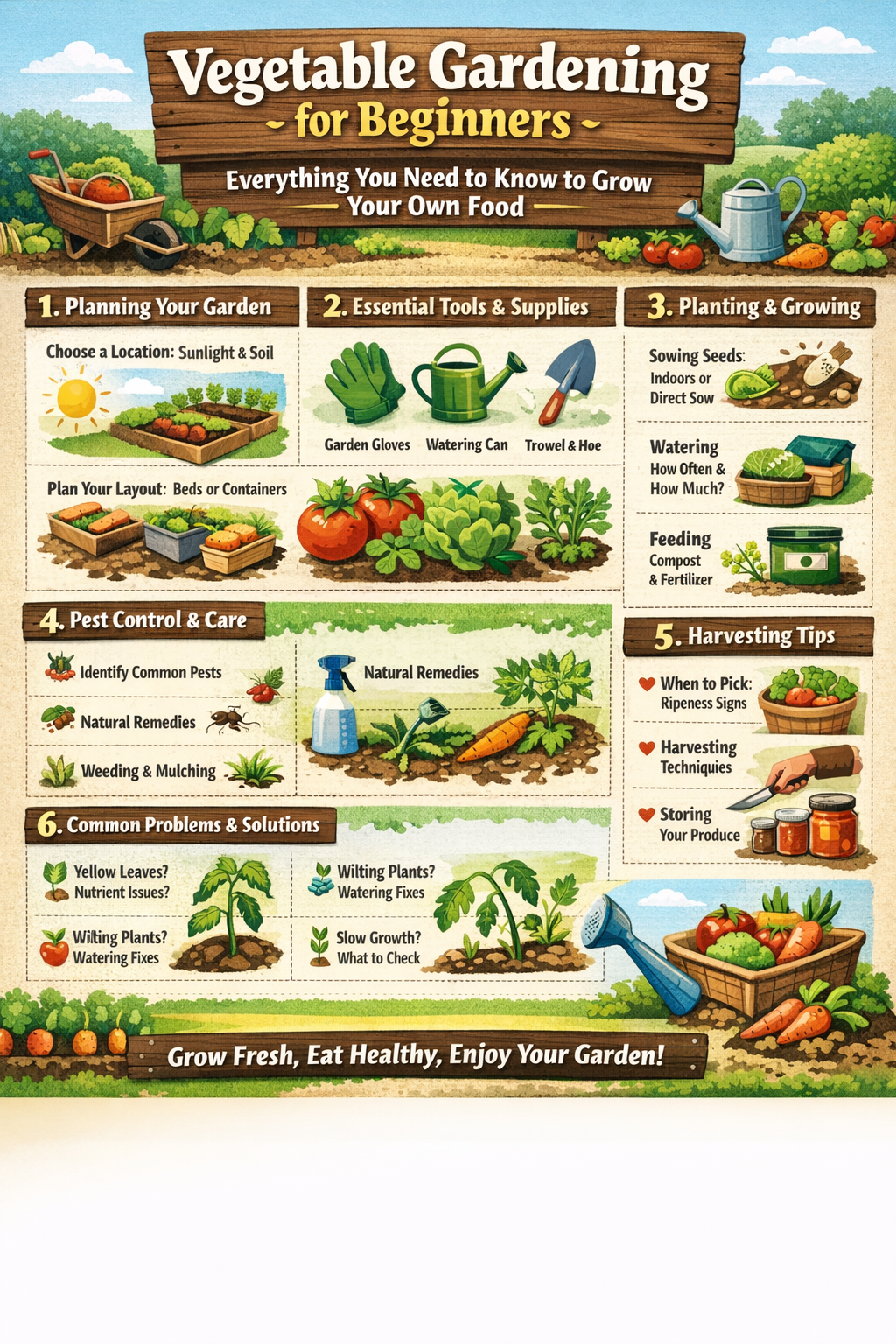
This vegetable gardening for beginners guide covers everything that actually matters in the first season: where to plant, what to grow, how to set up your soil, when to water, and how to keep things alive without spending every weekend in the garden. Skip the overwhelm. Start with what works.
Start Small — Seriously
The most common beginner mistake is planting too much. A large garden sounds appealing, but it quickly becomes work rather than pleasure — weeding, watering, harvesting, and managing pests across a space you can’t keep up with.
Dream big, but start small and expand as you gain experience. A 4×8 vegetable garden layout, a couple of large containers, or a 10×10 in-ground plot is enough to grow a meaningful harvest and learn what you’re doing without being overwhelmed. You’ll learn more from one well-managed small bed than from a large garden you can’t keep up with (this is exactly why planning your layout properly matters: /vegetable-garden-layout/).
Grow what your household actually eats. There’s no point in a bed full of kale if your family doesn’t eat kale. Think about which vegetables you buy regularly at the grocery store, which ones taste noticeably better fresh, and which ones your household will actually harvest and use. Tomatoes, salad greens, cucumbers, beans, and fresh herbs consistently top that list for most people.
Step 1 — Choose the Right Location
Location is the single decision that most determines your garden’s success, and it can’t be fixed later without moving everything.
Most vegetables need 6 to 8 hours of direct sunlight daily. Leafy greens can tolerate partial shade. Before you plant anything, spend a day observing where the sun falls on your property. A spot that looks sunny in the morning may be shaded by your house, fence, or trees by noon. Note where full sun lands from 9am to 4pm — that’s your garden site.
Step 2 — Decide on Raised Beds or In-Ground
Both approaches work. The choice depends on your soil, budget, and how much control you want over the growing environment—our raised bed gardening guide explains why this is often the best choice for beginners (/raised-bed-gardening-guide/).
Raised beds are the better choice for most beginners. Raised beds make efficient use of space and keep maintenance to a minimum. You fill them with quality growing mix, so you’re starting with good soil regardless of what’s underneath (if you’re going this route, getting the mix right matters: /raised-bed-soil-mix/). They drain well, warm up faster in spring, and keep weeds significantly more manageable. The main downside is upfront cost — building and filling a raised bed requires investment.
In-ground gardening costs less to start and works well when native soil is reasonable — loose, decent drainage, not contaminated. The main limitation is whatever your native soil brings: clay drainage problems, poor fertility, or weed seed banks from years of untouched ground. Most in-ground beginners need to amend the soil substantially before planting (start here if you’re working with native soil: /vegetable-garden-soil-prep/).
Step 4 — Know Your Frost Dates
Planting at the wrong time is one of the most common beginner failures — and one of the easiest to avoid. It’s important to understand your frost dates and growing zone (see our guide on when to plant vegetables for specific dates: /when-to-plant-vegetables-a-zone-by-zone-guide-to-getting-your-timing-right/). Use a first and last frost calculator to plug in your zip code and learn about your hardiness zone. Pay attention to both the first frost date (usually in the fall) and the last frost date (usually late spring). The summer months between those two days are how long you have to grow your garden.
Step 5 — Choose the Right Crops to Start With
Cucumbers grow fast and produce prolifically once established. Grow them on a trellis—a key technique in vertical vegetable gardening—to save space, improve air circulation, and make harvesting easy. If you want fast early wins, focus on crops that produce quickly (/fast-growing-vegetables/).
Where to Go Next
If you’re setting up your first garden, the next step is getting your spacing and structure right:
→ /vegetable-spacing-chart/
If your plants struggle later, it’s almost always tied back to watering habits:
→ /vegetable-garden-watering-guide/
And if something feels off, most issues come from a handful of predictable mistakes:
→ /common-vegetable-garden-mistakes/