
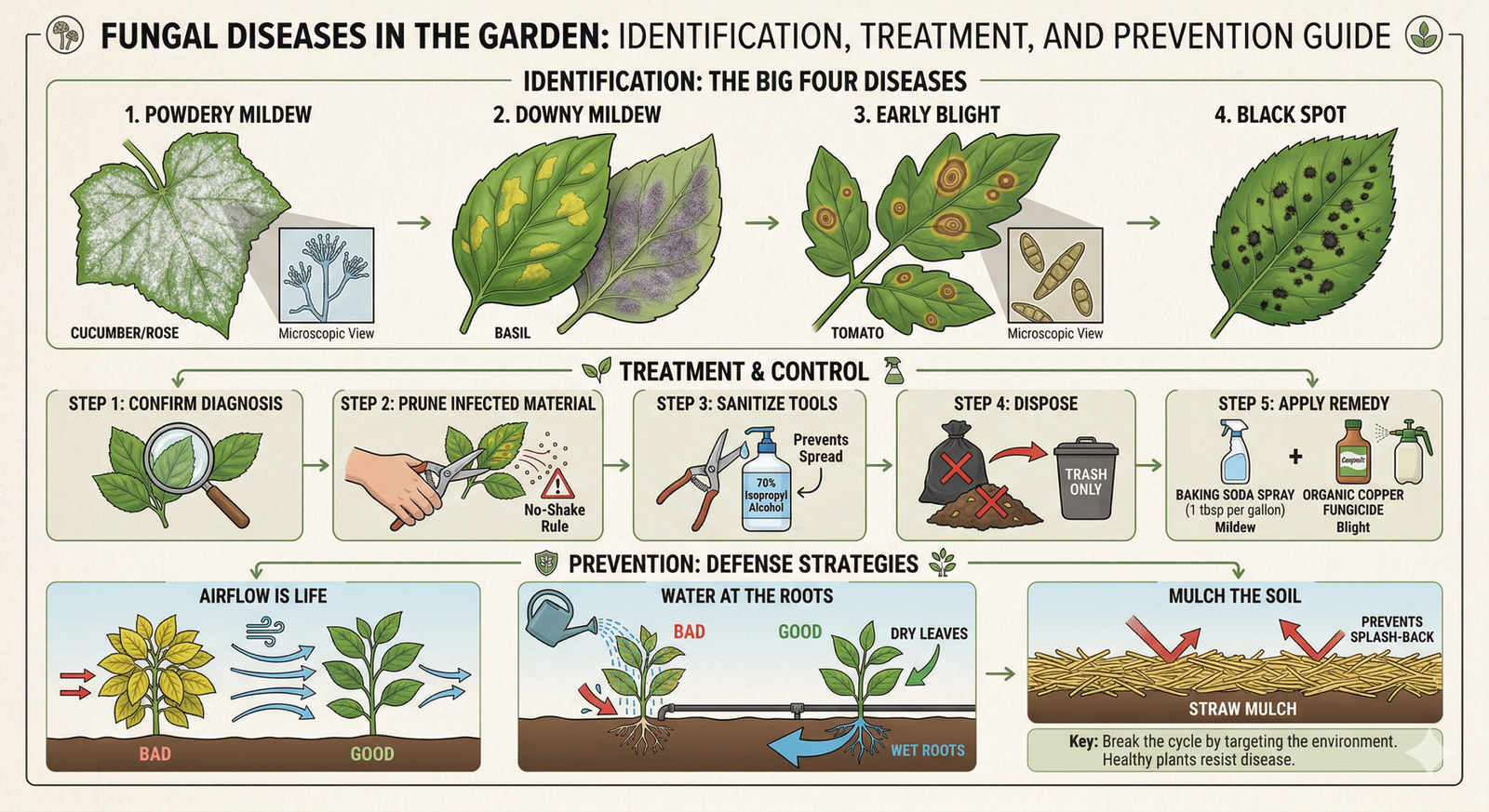
You notice spots on leaves that weren’t there a few days ago. Some look powdery, others dark and spreading. Leaves begin to yellow, weaken, and eventually die back.
This is usually a fungal disease—and once conditions are right, it can spread across your garden quickly.
If you’re not completely sure what problem you’re dealing with, start with the Garden Pest Identification Guide.
For a full system to manage pests and diseases, see the Garden Pest Control Guide.
For natural treatment options, use the Organic Garden Pest Control guide.
Quick Answer
Fungal diseases spread through moisture, poor airflow, and plant stress. The most effective control comes from removing infected areas, improving growing conditions, and preventing spread—not relying on a single treatment.
What Fungal Diseases Are (and Why They Spread)
Fungal diseases are caused by microscopic organisms that grow on plant tissue under the right conditions.
They spread through:
- water (rain, watering, splashing soil)
- air (spores carried between plants)
- contaminated tools or plant debris
The key factor is not just the fungus—it’s the environment that allows it to thrive.
Common Types of Fungal Diseases
Different diseases appear differently, but they follow similar patterns.
- powdery mildew (white coating on leaves)
- leaf spot diseases (dark or circular lesions)
- blights (rapid tissue death and spread)
- molds (fuzzy or discolored growth)
For a specific example, see the Tomato Blight Guide.
Signs of Fungal Disease
Most fungal issues show up as visible changes in leaves.
- spots, patches, or lesions
- powdery or fuzzy coatings
- yellowing around infected areas
- leaf drop over time
If symptoms don’t fully match, compare with:
Why Fungal Diseases Get Worse Quickly
Fungal diseases accelerate when conditions stay favorable.
- moisture stays on leaves
- plants are crowded
- airflow is limited
Once established:
- spores spread easily
- infection moves from leaf to leaf
- multiple plants become affected
How to Treat Fungal Diseases (Step-by-Step)
The goal is to slow spread and protect healthy growth.
1. Remove Infected Areas
Cut away affected leaves or stems immediately.
- reduces spore load
- slows spread
2. Improve Airflow
Airflow is one of the most important factors.
- space plants properly
- prune dense growth
- avoid overcrowding
3. Reduce Leaf Moisture
Avoid wet leaves whenever possible.
- water at soil level
- water early in the day
4. Apply Organic Treatments
Use treatments as part of a system.
- apply early
- repeat consistently
- focus on prevention, not cure
5. Monitor Continuously
Fungal diseases require ongoing observation.
Check plants regularly and act early.
What Actually Works (and What Doesn’t)
What works:
- early removal of infected areas
- improving airflow and spacing
- consistent prevention
What doesn’t:
- treating only after spread is severe
- watering leaves repeatedly
- ignoring environmental conditions
How to Prevent Fungal Diseases
Prevention is where most success comes from.
- maintain proper plant spacing
- use mulch to reduce soil splash
- rotate crops when possible
- keep garden clean of debris
Healthy plants resist disease better. Improve your foundation with the Vegetable Gardening Guide.
Common Mistakes
- ignoring early symptoms
- overcrowding plants
- overwatering
- not removing infected material
Where to Go Next
For specific disease cases, see:
For pest-related issues, review:
For hands-on work, use durable protection from Best Garden Gloves.
Conclusion
Fungal diseases are less about the pathogen and more about the conditions that allow it to spread.
If you control moisture, airflow, and plant health, you control the problem.