
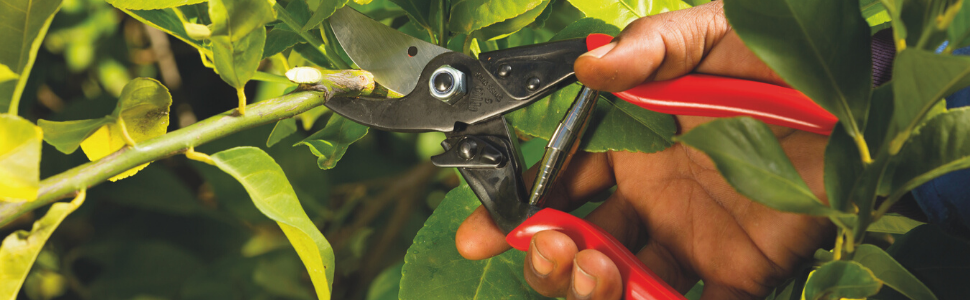
Rose pruning is unforgiving of wrong equipment. A dull blade on a rose cane doesn’t just make the cut harder — it crushes the cambium zone at the cut margin, slows callusing, and leaves the wound open to botrytis and other fungal pathogens for longer than a clean cut would. I learned this the hard way on a Rosa rugosa that developed dieback on three major canes in the season after I pruned it with a blade I’d let go too long without sharpening. The best pruning shears for roses make a clean, precise cut every time — and that cut directly affects plant health across the following season.
Why Roses Have Specific Pruning Shear Requirements
Live Wood Demands Bypass Only
Bypass pruners are the only correct tool for live rose wood. The slicing action preserves cambium integrity at the cut margin — the tissue that closes the wound and prevents pathogen entry. Anvil pruners compress rose wood before severing it, damaging a zone of cambium around the cut that slows healing and increases disease risk. On roses, that distinction is not marginal — it’s the difference between a clean, fast-healing wound and a crushed, slow-healing one.
Cut Angle and Placement Determine Healing Rate
The standard rose pruning cut is made at 45 degrees, approximately 5mm above an outward-facing bud. This specific geometry serves two functions: the angle sheds water away from the bud (reducing botrytis risk) and the proximity to the bud prevents die-back of the stub above it. Making this cut precisely requires a shear with accurate blade placement — a wobbling, imprecisely aligned blade makes the exact positioning this technique requires difficult to achieve consistently.
Thorn Contact Is Inevitable — Gloves Are Essential
See also: Best Garden Gloves for Rose Pruning and Thorn Protection
The Best Pruning Shears for Roses
1. Felco 2 — Best Overall for Rose Pruning
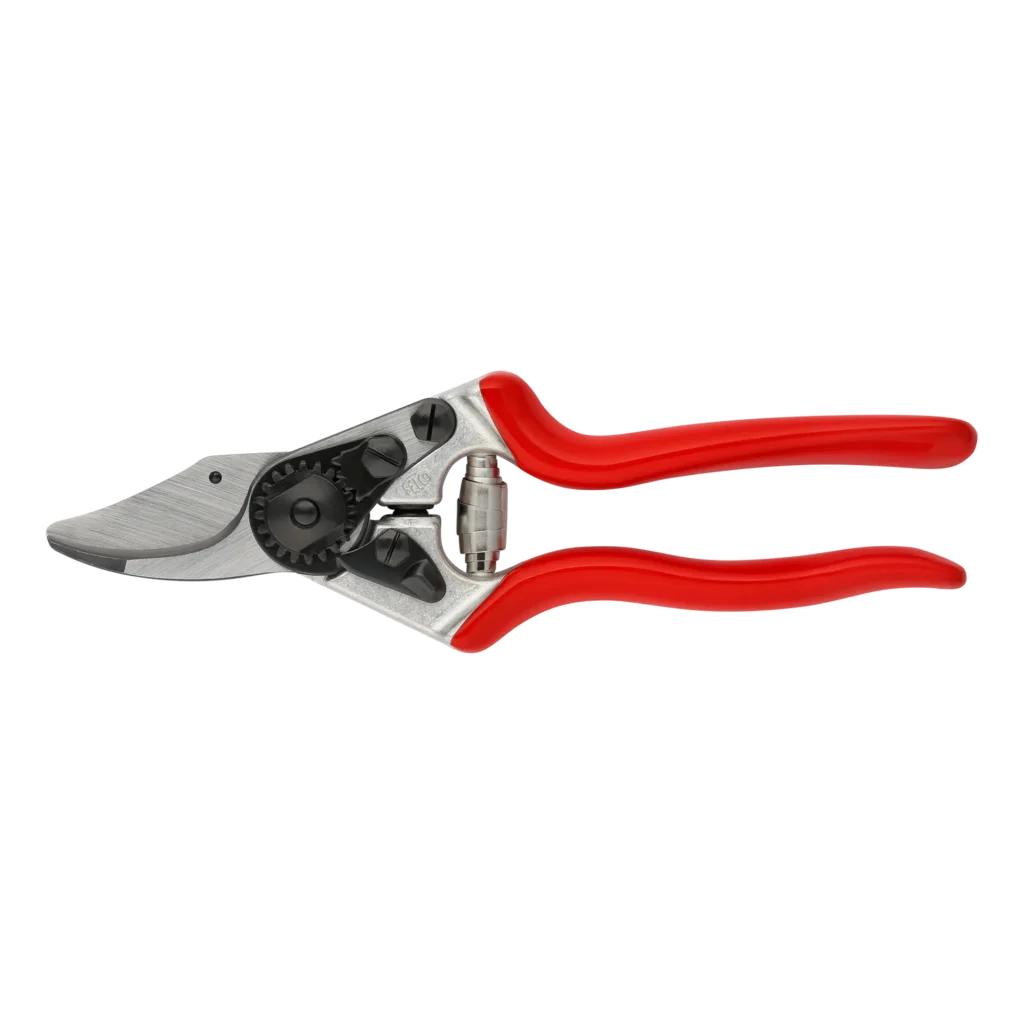
The Felco 2’s precision blade alignment makes the exact 45-degree cuts at bud proximity that correct rose pruning requires achievable consistently and repeatedly — session after session, year after year. The high-carbon steel blade maintains the sharpness that rose pruning demands across a full pruning session on a large collection.
I prune twenty-six roses with my Felco 2 in a single late-winter session every year. The cut quality on the last rose is the same as the first. Blade alignment hasn’t changed in six years of use. That consistency is what rose pruning over a large collection requires.
Small flaw: handle size suits medium to large hands — smaller-handed rose gardeners should use the Felco 6.
Best for: Serious rose gardeners with medium to large hand size pruning established collections regularly
2. ARS HP-VS8Z — Best for Large Rose Collections
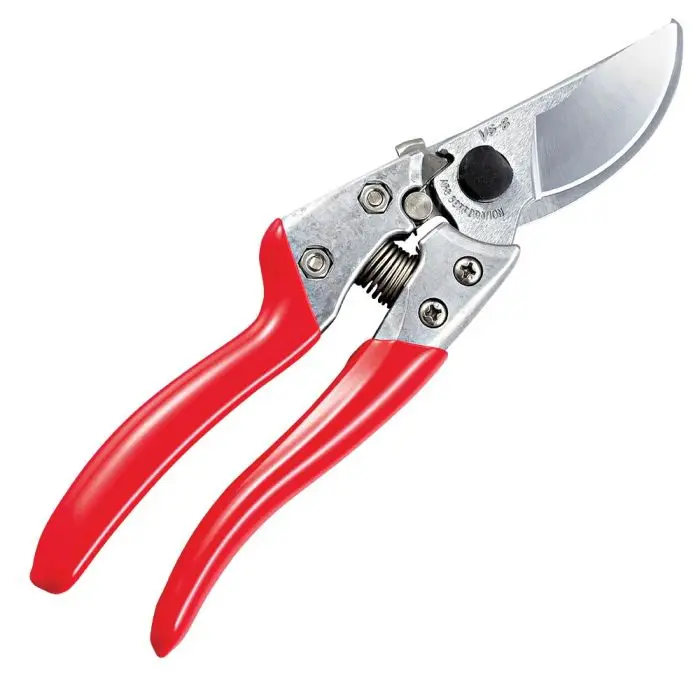
The ARS fluorine-coated blade maintains consistent cutting performance across extended sessions in a way that matters specifically for rose pruning. Rose sap is particularly adhesive — it builds up on uncoated blades through a long session and progressively increases friction and required cutting force. The fluorine coating resists this accumulation, keeping the blade action consistent from the first cut to the last.
For rose gardeners managing large collections in a single session, that consistency has direct impact on cut quality across the full session rather than just the first half.
Small flaw: specialist retail availability requires planning purchase in advance.
Best for: Rose gardeners with large collections where blade consistency across a full long session is the priority
3. Felco 8 — Best for Rose Gardeners with Fatigue Issues
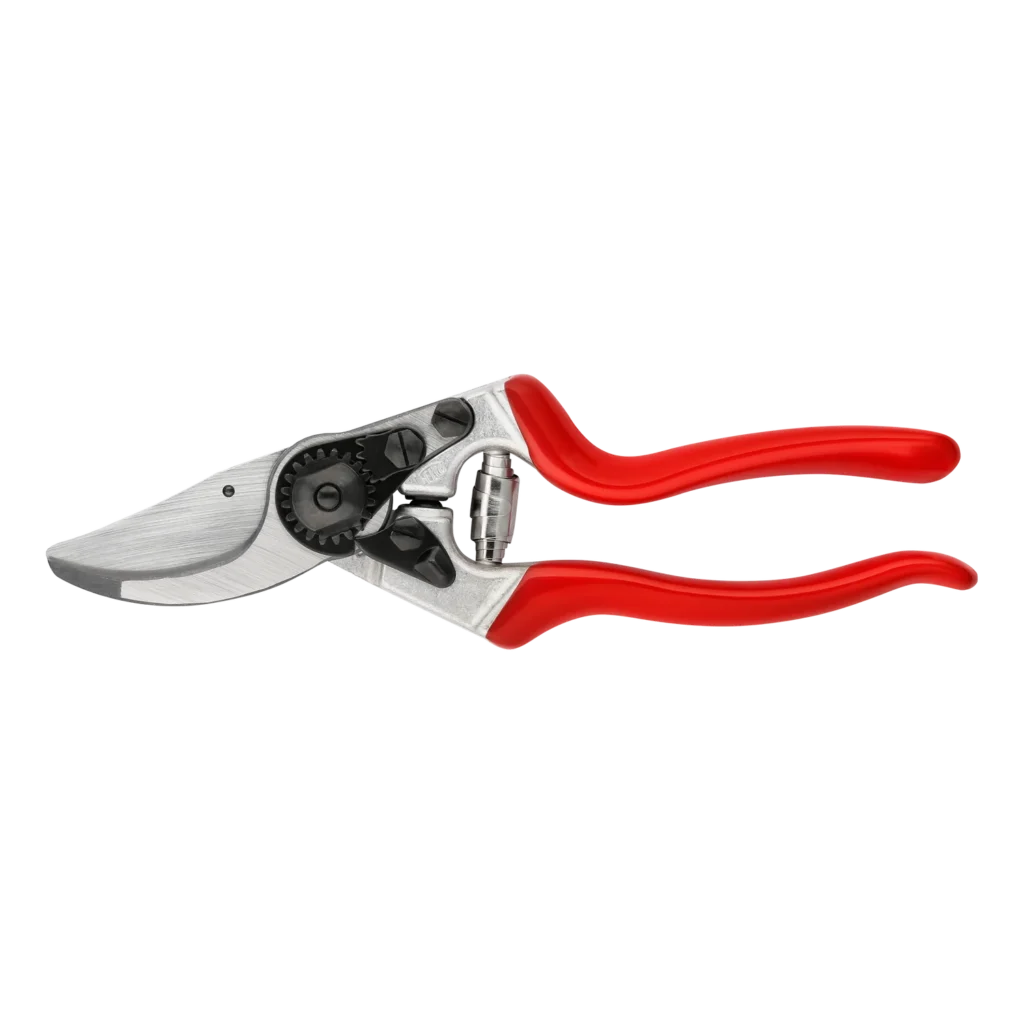
A large rose collection pruned thoroughly is a genuinely demanding task. The repetitive squeeze-and-release across hundreds of cuts accumulates into real hand fatigue for many gardeners. The Felco 8’s rotating handle reduces that fatigue meaningfully — the same cut quality as the Felco 2, with the ergonomic addition that makes long rose pruning sessions more sustainable.
Small flaw: rotating handle adjustment period of one to two sessions.
Best for: Rose gardeners whose collections are large enough that hand fatigue becomes a limiting factor before the job is done
4. Bahco P-123-19 — Best Alternative for Rose Pruning
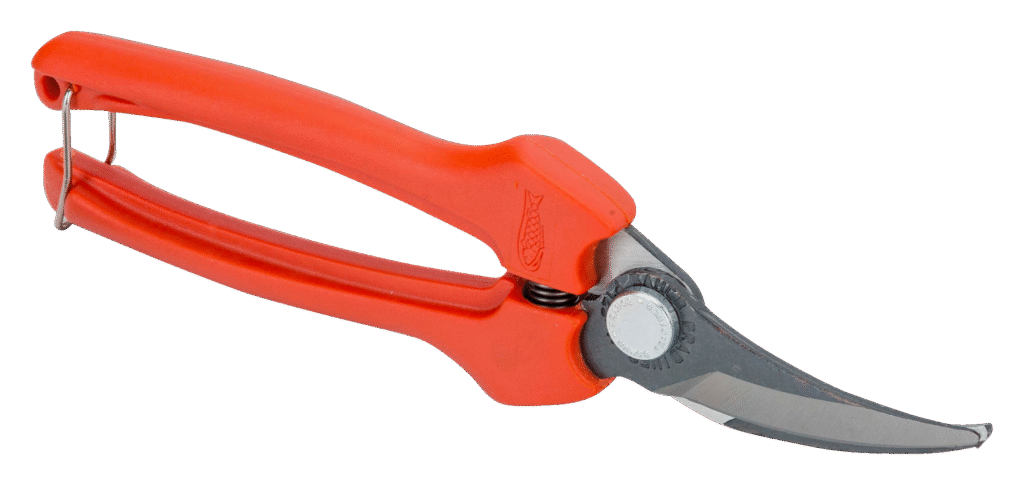
The Bahco P-123-19 brings professional blade specification, full serviceability, and rotating handle ergonomics to rose pruning in Bahco’s specific geometry. For gardeners whose hands sit more naturally in Bahco’s handle dimensions than Felco’s, this is the professional-quality rose pruning recommendation.
Small flaw: blade needs slightly more frequent sharpening under equivalent rose pruning volume.
Best for: Rose gardeners whose hand geometry suits Bahco’s handle dimensions
5. Spear & Jackson Kew Gardens — Best Budget Rose Pruner
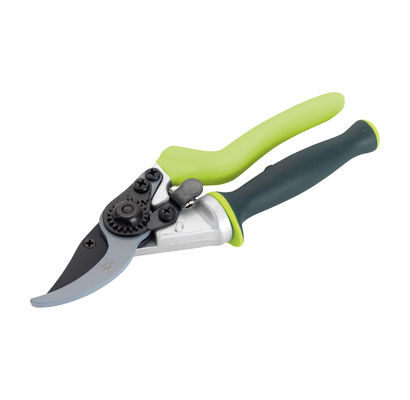
For rose gardeners who want honest bypass performance on a limited budget, the Spear & Jackson Kew Gardens secateur delivers clean cuts on fresh rose growth at an accessible price. The Royal Botanic Gardens Kew association reflects genuine horticultural standards.
Carbon steel blade, adequate alignment, comfortable handle — correct and functional for home rose garden use without professional investment.
Small flaw: dulls faster than premium alternatives — sharpening before every session is more important with this tool than with professional alternatives.
Best for: Home rose gardeners wanting honest bypass performance without premium investment See also: Best Budget Pruning Shears
Pros & Cons
| Pros | Cons |
|---|---|
| Bypass slicing action preserves cambium — critical for rose wound healing | Dull blades damage rose cambium as much as wrong tool choice |
| Precise blade alignment enables correct 45-degree bud-proximity cuts | Blade sap accumulation reduces performance across long sessions without maintenance |
| Full serviceability on premium options for indefinite useful life | Bypass only — anvil pruners are incorrect for live rose wood regardless of quality |
| Rotating handle options extend comfortable working time on large collections | Professional tools require sharpening discipline to deliver their quality advantage |
Who These Are For / Not For
Right tool if you: Grow roses seriously — established collections, regular seasonal pruning, any situation where plant health outcomes from pruning quality matter across years. Understand that the tool quality directly affects how well your roses heal and how disease-resistant the pruning wounds are.
Wrong tool if you: Have only one or two roses pruned annually — honest budget options work fine for that frequency. Need to cut dead rose wood — anvil pruners handle that material more efficiently.
See also: Best Bypass Pruning Shears | How to Sharpen Pruning Shears
Final Verdict
The best pruning shears for roses are sharp bypass shears with precise blade alignment — the Felco 2 for most rose gardeners, the ARS HP-VS8Z for those managing large collections where blade consistency across a long session is the priority, and the Felco 8 for gardeners whose collections are large enough that fatigue reduction has practical impact.
Sharpen before every rose pruning session without exception. The five minutes it takes changes every cut that follows.