
Something is eating your roses down to bare stems. The beans look like lace. The corn silk is gone.
You find the culprits in the early morning — clusters of shiny, metallic beetles feeding together.
Japanese beetles are one of the most destructive garden pests in the eastern United States, but they are manageable with the right approach.
If you are not fully sure what you’re dealing with:
👉 Garden Pest Identification Guide
For the full control system:
👉 Garden Pest Control Guide
Identification
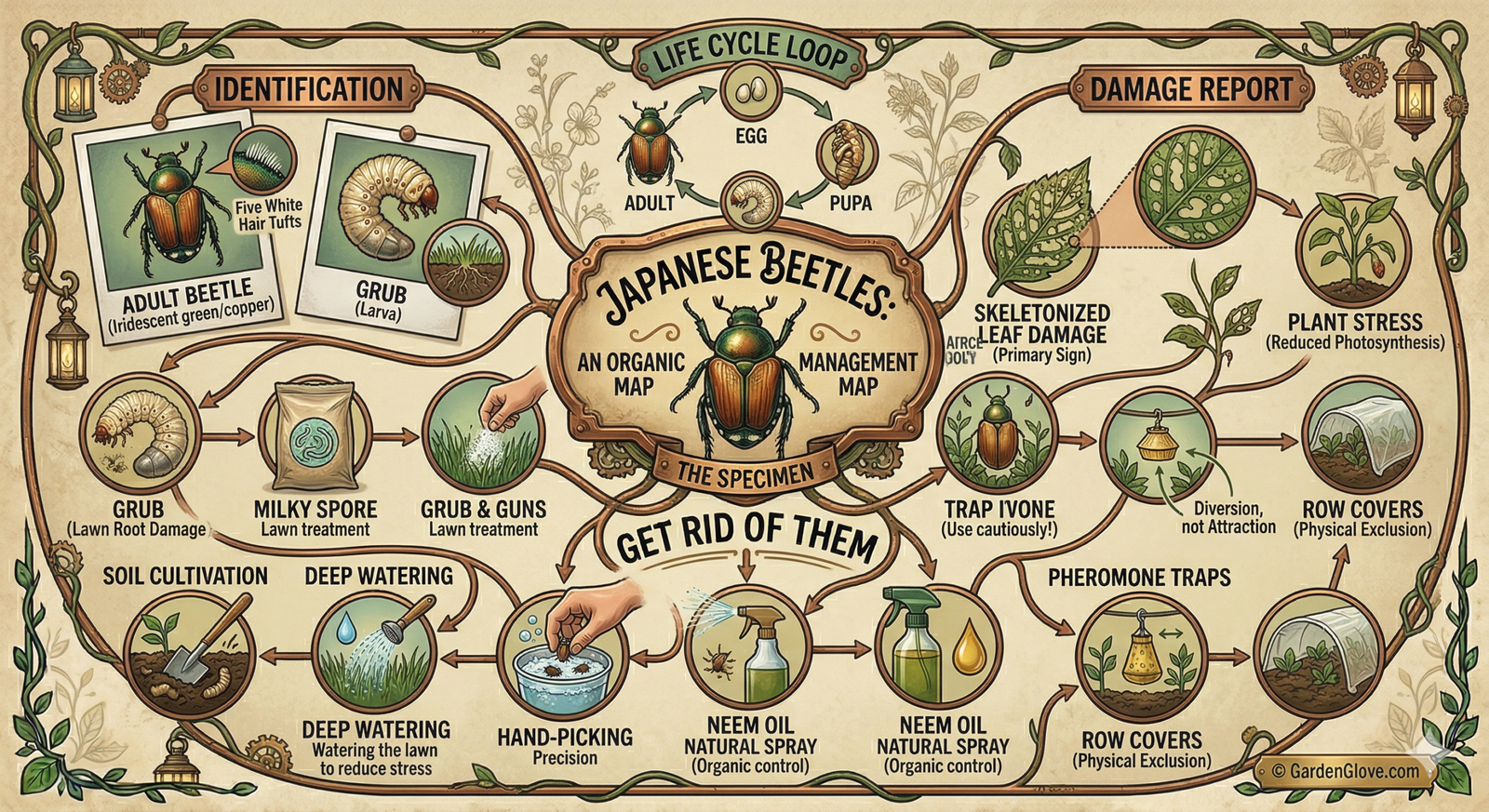
Adult Japanese beetles are about 3/8 inch long with metallic-green bodies and copper-colored wings. Along the sides of the abdomen are distinct white hair tufts.
These tufts are the easiest way to distinguish them from similar beetles.
—
Damage: What to Look For
- Skeletonized leaves: tissue eaten between veins
- Grouped feeding: beetles cluster and escalate quickly
- Damage high on plants: often visible at eye level
- Rose destruction: petals and buds eaten from inside
- Lawn damage: grubs feeding on roots underground
—
Plants Most at Risk
- roses
- beans
- corn
- grapes
- fruit trees
- zinnias
—
Why Japanese Beetles Keep Coming Back
Japanese beetles have a one-year life cycle. Adults feed for about six weeks, but the rest of the year is spent underground as grubs.
Controlling only the visible beetles without addressing grubs often leads to repeat infestations.
—
How to Get Rid of Japanese Beetles
1. Hand-pick Early
In the morning, beetles are slow and easy to remove. Knock them into soapy water daily.
2. Use Neem Oil Early
Neem oil reduces feeding and slows population growth when applied consistently.
3. Avoid Pheromone Traps Near Plants
Traps often attract more beetles than they remove, increasing damage.
4. Use Kaolin Clay
A protective coating that discourages feeding on high-value plants.
5. Treat Grubs in the Soil
Reducing grubs helps prevent next year’s infestation.
- beneficial nematodes
- milky spore (long-term)
For full organic strategy:
👉 Organic Garden Pest Control
—
What to Avoid
Broad-spectrum insecticides can worsen long-term problems by killing beneficial insects.
—
How to Prevent Japanese Beetles
- spread out preferred plants
- use trap crops away from the garden
- avoid overwatering lawns during egg-laying season
- remove fallen fruit
- rotate crops
Improve garden resilience here:
👉 Vegetable Gardening Guide
—
Quick Reference
- Skeletonized leaves → active feeding
- Grouped beetles → rapid escalation
- Rose damage → high attraction
- Lawn damage → grub stage present
—