I spent the first few years of serious gardening trying to find one pair of gloves that did everything. Light enough for planting, tough enough for pruning, grippy in wet conditions, comfortable all day. Something that handled roses without complaint but didn’t make transplanting seedlings feel like wearing oven mitts.
It doesn’t exist. I’ve saved you the search.
The honest answer — the one that every experienced gardener eventually arrives at — is that nitrile and leather gloves are tools for different jobs, the same way a trowel and a spade are both digging tools but not interchangeable. Once I accepted that and kept both types in the shed, the glove frustration I’d been living with just stopped.
When learning how to choose garden gloves, understanding this distinction is the first step toward protecting your hands properly.
Nitrile vs Leather Garden Gloves: What Nitrile Actually Is
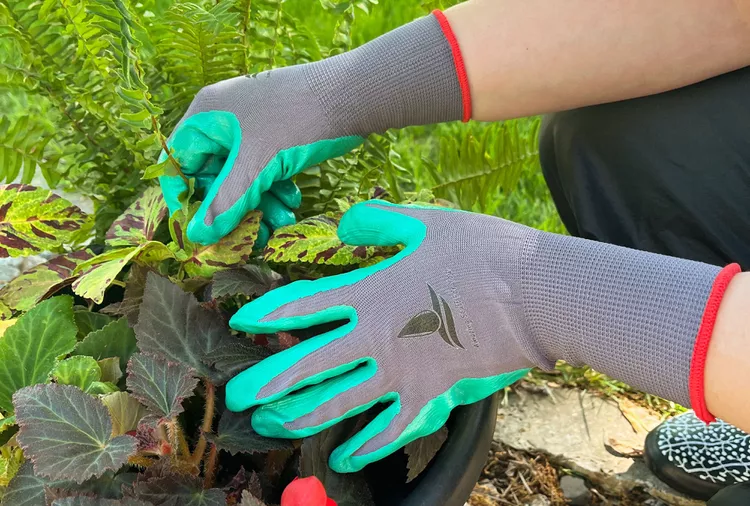
Nitrile is a synthetic rubber applied as a coating to a lightweight fabric base — usually a stretchy polyester or nylon knit. The fabric back breathes freely and flexes naturally with your hand. The nitrile coating on the palm and fingers provides grip, resists moisture, and handles the normal abrasion of soil and everyday gardening tools.
The result is a glove that feels almost like a second skin. Your fingers move naturally. You can feel what you’re touching. You can work for extended periods without your hands getting tired or overheated. And in damp or wet conditions — which in practice means most mornings in the garden — the nitrile coating maintains grip where bare fabric would slip immediately.
What nitrile genuinely does well:
- Planting, transplanting, anything requiring real sensitivity
- Weeding, especially in damp conditions where grip on thin stems matters
- General everyday gardening where comfort and dexterity are the priority
- Working in wet or damp soil
- Long sessions where breathability keeps your hands comfortable throughout
Where nitrile genuinely falls short:
- Rose pruning and any seriously thorned plant — a nitrile glove will not stop a determined thorn
- Heavy sustained digging in rough or stony ground — it thins out at the palm under that kind of grinding use
- Any task where maximum durability matters more than flexibility
Our 7 Best Nitrile Coated Garden Gloves for Grip and Flexibility guide covers the specific pairs worth buying.
What Leather Gloves Actually Are
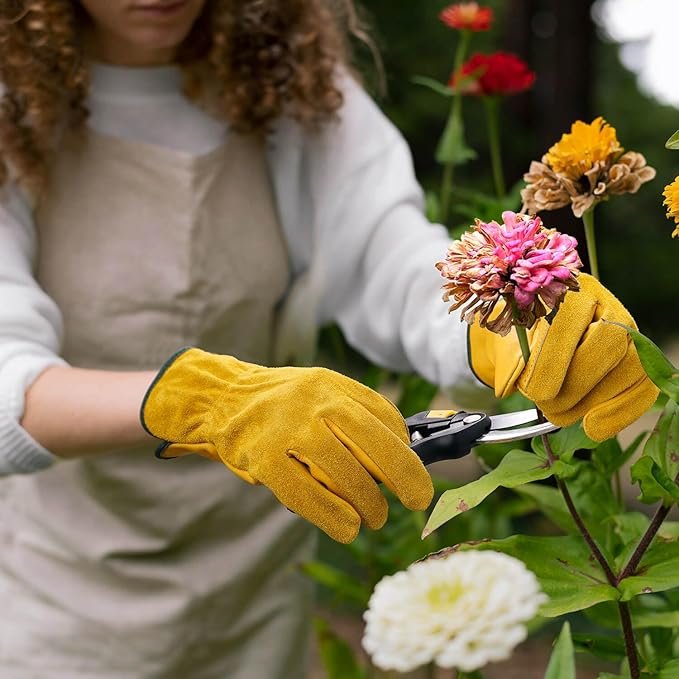
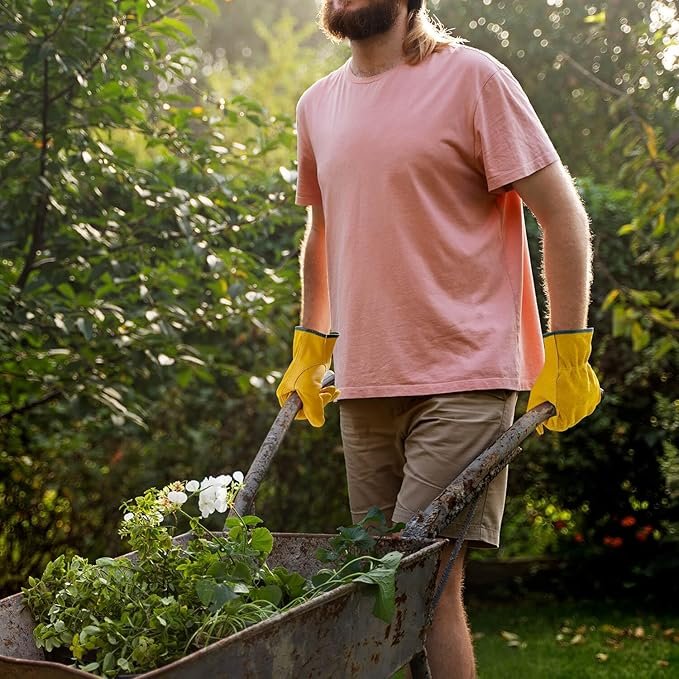
Leather garden gloves are made from natural hide — cowhide, goatskin, or pigskin being the most common. Each behaves slightly differently, but they all share the fundamental property of leather: dense, interlocked fibres that compress under pressure rather than separating.
That structure is what makes leather do things other materials can’t. A thorn pushing against good leather encounters resistance rather than a path through. Rough soil dragging across the palm gets absorbed by the leather surface rather than grinding through it. A tool handle rotating in your grip over an hour of digging gets held by leather in a way that lighter materials can’t sustain.
New leather takes a short break-in period — it can feel stiff for the first few sessions. But once it’s moulded to your hands it becomes genuinely comfortable for the heavy work it’s designed for.
What leather genuinely does well:
- Digging, especially in rough, stony, or compacted ground
- Pruning woody shrubs and handling thorned plants
- Moving rough materials — rocks, timber, heavy branches
- Any sustained heavy work where durability is the priority
- Long-term cost efficiency — good leather outlasts multiple pairs of lighter gloves
Where leather genuinely falls short:
- Delicate planting and transplanting — too thick to feel what you’re doing
- Hot weather extended sessions — leather gets warm
- Waterlogged conditions — leather stiffens when repeatedly soaked
- Anything requiring fine sensitivity and precision
Our Best Leather Gardening Gloves for Durability and Protection guide has the full recommendations.
The Real-World Comparison
Rather than a table of abstract ratings, here’s how the differences actually play out in the garden:
You’re transplanting seedlings on a damp morning. Nitrile. You need to feel the roots, control your grip pressure, move quickly and carefully. Leather makes this clumsy; nitrile lets you feel exactly what you’re doing.
You’re pruning a mature rose bush. Leather — proper thick leather with a long gauntlet cuff. Nitrile will not stop a rose thorn if you’re gripping a stem firmly. This isn’t a close call.
You’re digging a new bed in clay soil for two hours. Leather. The sustained abrasion and tool pressure is exactly what leather is built for. Nitrile would thin at the palm within a session like this.
You’re weeding raised beds after rain. Nitrile. Flexible, grippy on wet stems, breathable for a long comfortable session. Leather would get heavy and damp.
You’re moving a pile of rough stone edging. Leather. The abrasion and sharp edges are what leather was designed for. Nitrile would be through in twenty minutes.
You’re doing a full morning of mixed gardening — some planting, some deadheading, some light tidying. Nitrile. It covers the variety of tasks comfortably and is pleasant to wear all morning.
Safety and Selection
When choosing your gear, it’s worth reviewing the CDC glove selection guidance to understand how different materials protect against various hazards.
Forward Link
For those ready to tackle the toughest ground, see our guide on The Best Garden Gloves for Digging — Because Your Palms Take the Worst of It.
Final Thoughts
Do you actually need both? Yes. And I say that as someone who spent years resisting the answer.
Both types are affordable. Owning both solves the frustration that comes from trying to make one type cover everything. The practical setup most experienced gardeners land on is straightforward: nitrile as the everyday default for light to moderate work, leather for the heavy sessions and the thorny plants.