
Your tomato plants look fine one week, then suddenly leaves develop dark spots, yellowing spreads, and sections of the plant begin to die back.
This is tomato blight—and once it starts, it can move through your garden faster than you expect.
If you’re not completely sure what problem you’re dealing with, start with the Garden Pest Identification Guide.
For a full system to manage pests and diseases, see the Garden Pest Control Guide.
For natural treatment options, use the Organic Garden Pest Control guide.
Quick Answer
Tomato blight is a fungal disease that spreads through moisture, plant contact, and contaminated soil. The most effective control comes from early removal, reducing moisture exposure, and improving airflow—not just applying treatments.
What Tomato Blight Is (and Why It Spreads So Easily)
Tomato blight refers to several fungal diseases that attack tomato plants, primarily affecting leaves and stems.
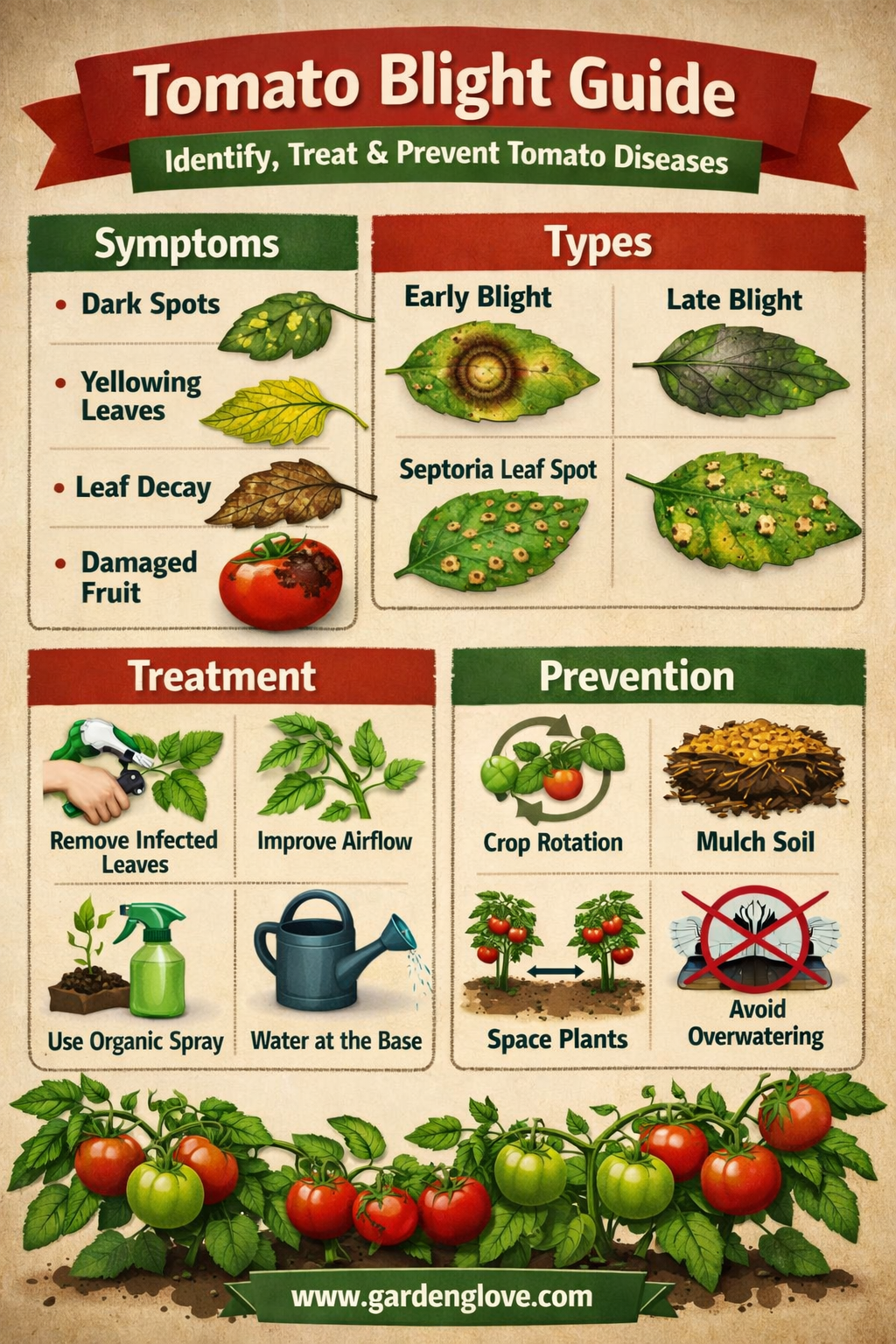
The most common types include:
- early blight
- late blight
- septoria leaf spot
All spread under similar conditions:
- moisture on leaves
- poor airflow
- warm or humid environments
Once established, spores spread quickly through water, tools, and plant contact.
Signs of Tomato Blight
Blight usually starts low on the plant and moves upward.
- dark brown or black spots on leaves
- yellowing around infected areas
- leaves drying and dying back
- rapid spread in humid conditions
If symptoms don’t fully match, compare with:
Why Tomato Blight Gets Worse Quickly
Blight is not just a plant issue—it’s an environmental problem.
Once conditions are right:
- spores spread through splashing water
- infection moves leaf-to-leaf
- entire plants can decline rapidly
This is why:
👉 waiting even a few days can make control much harder
How to Treat Tomato Blight (Step-by-Step)
The goal is to slow spread and protect healthy growth.
1. Remove Infected Leaves Immediately
Cut off affected leaves as soon as you see symptoms.
- removes active infection
- reduces spore spread
2. Improve Airflow
Blight thrives in stagnant conditions.
- space plants properly
- prune lower foliage
- reduce crowding
3. Water at the Base Only
Avoid wetting leaves.
- reduces fungal spread
- keeps foliage dry
4. Apply Organic Treatments
Use natural treatments as part of a system—not a single fix.
Best used:
- early in infection
- repeatedly over time
5. Monitor Daily
Blight requires active management.
Check plants regularly and remove new affected areas quickly.
What Actually Works (and What Doesn’t)
What works:
- early removal
- airflow improvement
- consistent monitoring
What doesn’t:
- waiting until spread is advanced
- overhead watering
- relying on one treatment
How to Prevent Tomato Blight
Prevention is where most gardeners gain control.
- rotate crops each season
- use mulch to prevent soil splash
- space plants properly
- avoid excessive watering
Strong plants are more resistant. Improve your foundation with the Vegetable Gardening Guide.
Common Mistakes
- ignoring early spots
- overcrowding plants
- watering leaves instead of soil
- not removing infected material
Where to Go Next
For related issues, see:
For broader disease coverage, review Fungal Diseases in the Garden.
For hands-on work, use durable protection from Best Garden Gloves.
Conclusion
Tomato blight spreads quickly, but it is manageable with early action and the right conditions.
The key is not just treatment—it’s controlling the environment that allows it to spread in the first place.
{
“@context”: “https://schema.org”,
“@type”: “Article”,
“headline”: “Tomato Blight: How to Identify, Treat, and Prevent It”,
“description”: “Learn how to identify tomato blight, treat it effectively, and prevent it from spreading.”,
“author”: {
“@type”: “Person”,
“name”: “GardenGlove”
},
“publisher”: {
“@type”: “Organization”,
“name”: “GardenGlove”
}
}