
You walk out to the tomato bed and something is wrong. A stem that was loaded with leaves yesterday has been stripped bare. Dark pellets are scattered on the leaves below.
You look closer — and there it is. A caterpillar the size of your finger, perfectly green and nearly invisible against the stem.
That’s a tomato hornworm, and they can defoliate a plant faster than almost any other garden pest.
If you are not fully sure what you’re seeing:
👉 Garden Pest Identification Guide
For the full control system:
👉 Garden Pest Control Guide
What Tomato Hornworms Are
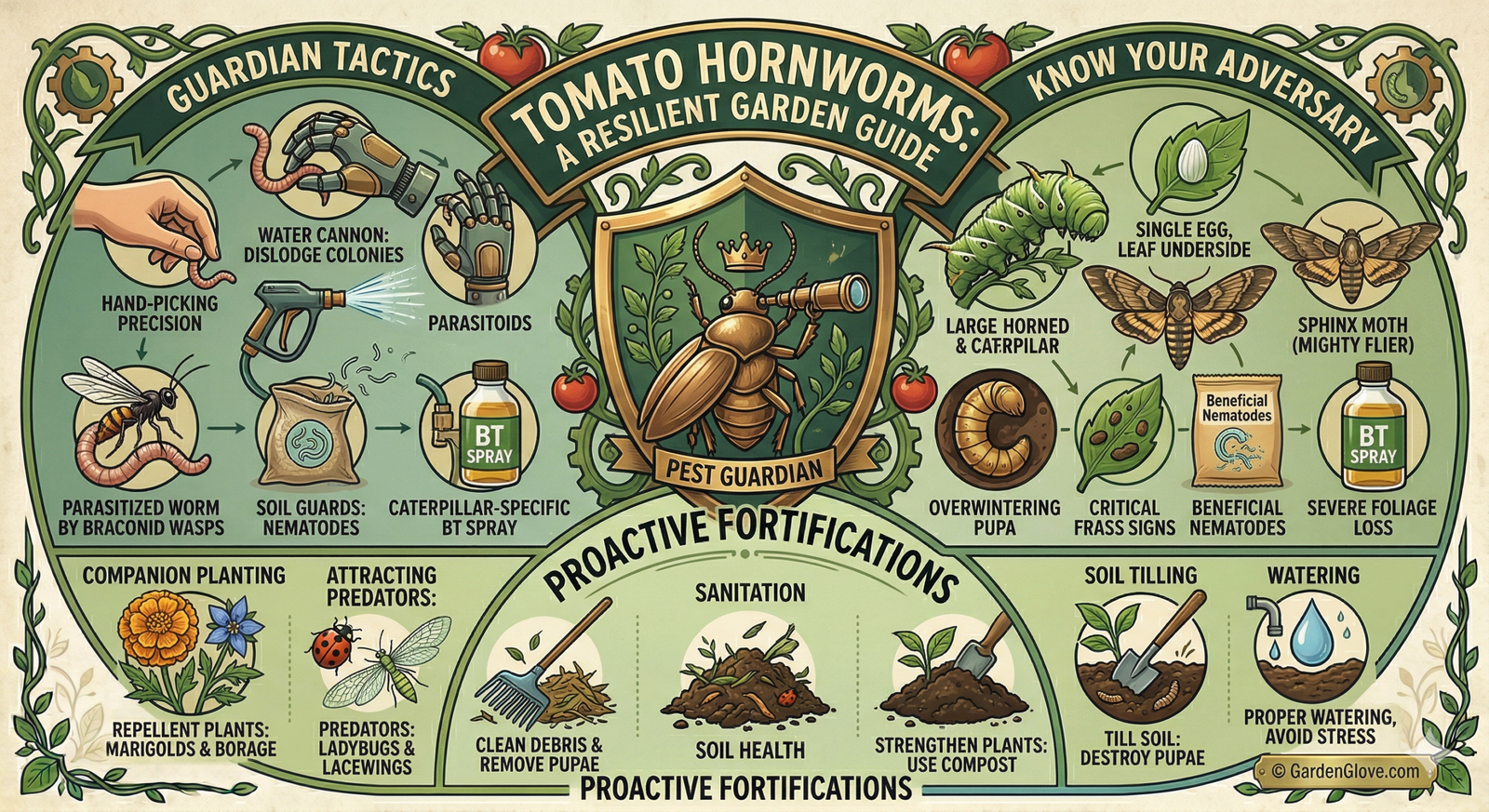
Tomato hornworms are large green caterpillars with a distinctive horn-like tail. They feed aggressively on tomato plants and other nightshades.
They are the larval stage of a sphinx moth, often seen hovering at dusk like a hummingbird.
—
Signs of Damage
- Stripped stems: leaves completely eaten
- Dark frass: droppings scattered below feeding areas
- Damaged fruit: deep holes in tomatoes
- Rapid plant decline: heavy feeding in a short time
—
Why Hornworms Spread
Hornworms grow extremely fast and can double in size in days. Multiple generations can occur in one season, especially in warm climates.
—
How to Get Rid of Tomato Hornworms
1. Hand-pick First
Remove hornworms by hand and drop them into soapy water. This is the fastest and most effective control method.
2. Look for Parasitized Hornworms
If you see white cocoons on a hornworm, leave it. These are beneficial wasps controlling the population naturally.
3. Use Bt for Smaller Larvae
Bt works best on young caterpillars before they reach full size.
4. Use Neem Oil Preventively
Neem oil helps deter egg-laying and reduce early-stage feeding.
👉 Organic Pest Control Methods
—
What to Avoid
Broad-spectrum insecticides kill beneficial insects and weaken long-term pest control.
—
How to Prevent Hornworms
- inspect plants regularly
- rotate crops yearly
- disturb soil after harvest
- encourage beneficial insects
Improve overall plant health here:
👉 Vegetable Gardening Guide
—
Quick Reference
- Stripped stems → active feeding
- Dark pellets → fresh damage
- Large caterpillar → hornworm confirmed
- White cocoons → beneficial insects present
—