Watering seems like the simplest part of vegetable gardening. You give plants water, and they grow.
But in reality, watering is one of the biggest reasons gardens succeed or fail. Too much water leads to weak roots and disease. Too little leads to stress, poor growth, and disappointing harvests.
Most vegetables are made up of 70–95% water. That means watering directly affects not just hydration, but nutrient uptake, root depth, plant strength, and overall yield.
This guide breaks down what actually works: how much to water, how often to water, how soil changes everything, and how to build a simple system you can follow all season.
Start With Structure — Watering Is Easier Than You Think
Watering becomes significantly easier when your garden is set up correctly.
If your layout, soil, and spacing are dialed in, watering becomes predictable instead of guesswork.
For a full system that makes watering, drainage, and soil control easier, start here:
👉 Raised Bed Gardening Guide
If you’re still planning your garden layout, this matters more than most people expect:
👉 Vegetable Garden Layout
The 1 Inch Per Week Rule — What It Actually Means
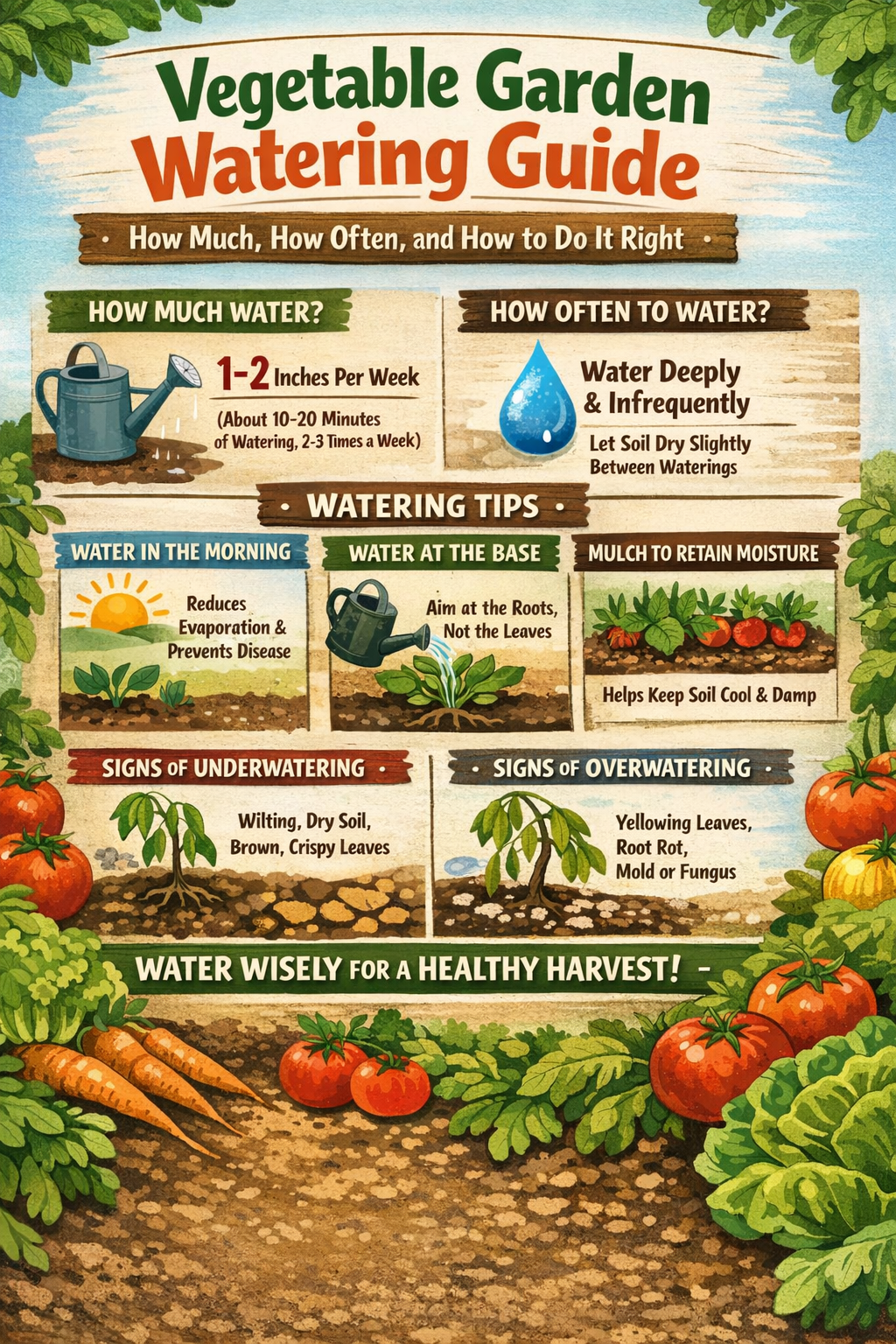
You’ll often hear that vegetables need “about 1 inch of water per week.”
This is a useful starting point, but it’s not a strict rule. It includes both rainfall and irrigation, and it assumes average conditions.
In reality, your garden might need more or less depending on:
- soil type
- temperature
- plant size
- sun exposure
Instead of treating it as a fixed number, think of it as a baseline you adjust based on what your garden is telling you.
How Soil Type Changes Everything
Soil determines how water behaves in your garden.
Sandy soil drains quickly, meaning you may need to water more often. Clay soil holds water longer, but can easily become waterlogged.
If you’re unsure what you’re working with or how to improve it, start here:
👉 Best Garden Soil
And for building a proper foundation before planting:
👉 Vegetable Garden Soil Prep
How to Know When Your Garden Actually Needs Water
The best watering decisions come from observation, not schedules.
The simplest test is the finger test:
- stick your finger 2–3 inches into the soil
- if it feels dry, water
- if it still feels moist, wait
This prevents both overwatering and underwatering, which are the two most common problems.
When to Water — Morning Is Best
Early morning is the best time to water.
It allows moisture to reach roots before heat increases evaporation, and gives leaves time to dry during the day, reducing disease risk.
Watering in the evening is better than skipping it entirely, but wet leaves overnight can increase fungal issues.
Deep Watering vs. Shallow Watering
Deep watering encourages roots to grow downward, making plants more resilient.
Shallow watering keeps roots near the surface, where they dry out faster and become more vulnerable.
Water less often, but water thoroughly. That is the goal.
Watering at Different Growth Stages
Plants do not need the same amount of water at every stage.
- Seedlings: consistent light moisture
- Growing plants: deeper, less frequent watering
- Fruiting plants: steady moisture to avoid stress and poor yields
Inconsistent watering during fruiting is one of the most common causes of poor quality vegetables.
Watering Methods — Which One to Use
The best watering method delivers water to the roots while keeping leaves as dry as possible.
- Drip irrigation: most efficient and consistent
- Soaker hoses: simple and effective
- Hand watering: flexible but inconsistent if rushed
- Sprinklers: least efficient and can increase disease risk
If you want a system that reduces daily effort, this is worth setting up correctly:
👉 Raised Bed Irrigation
Mulch — The Watering Multiplier
Mulch reduces evaporation, stabilizes soil temperature, and keeps moisture consistent.
It can cut your watering needs significantly while improving plant health.
If you’re not using mulch yet, this is one of the easiest upgrades you can make:
👉 Raised Bed Fertilizer Guide
Signs of Overwatering vs. Underwatering
Both problems can look similar, but they have different causes.
- Overwatering: yellow leaves, slow growth, soggy soil
- Underwatering: wilting, dry soil, stunted plants
When in doubt, check the soil first before reacting.
A Simple Watering Framework
If you want to keep things simple, follow this:
- check soil moisture first
- water deeply, not frequently
- adjust based on weather and plant stage
- use mulch to stabilize moisture
This removes most of the guesswork and keeps your garden consistent.