Plant spacing is one of those things gardeners either ignore entirely or obsess over — and the right answer sits somewhere between guessing and graph paper. The spacing numbers on seed packets are a starting point, but they’re written for traditional row gardening in average conditions. In a raised bed, a small plot, or intensive garden, you can often plant closer. In poor soil or a humid climate prone to fungal disease, you need more room.
Knowing when to plant vegetables is one timing question — knowing how far apart to plant them is a different one, and getting it wrong in either direction costs yield and plant health (if timing is still unclear, start here: /when-to-plant-vegetables-a-zone-by-zone-guide-to-getting-your-timing-right/). Crowd plants and they compete for light, water, and nutrients, produce less, and invite disease. Give them too much room and you waste productive space.
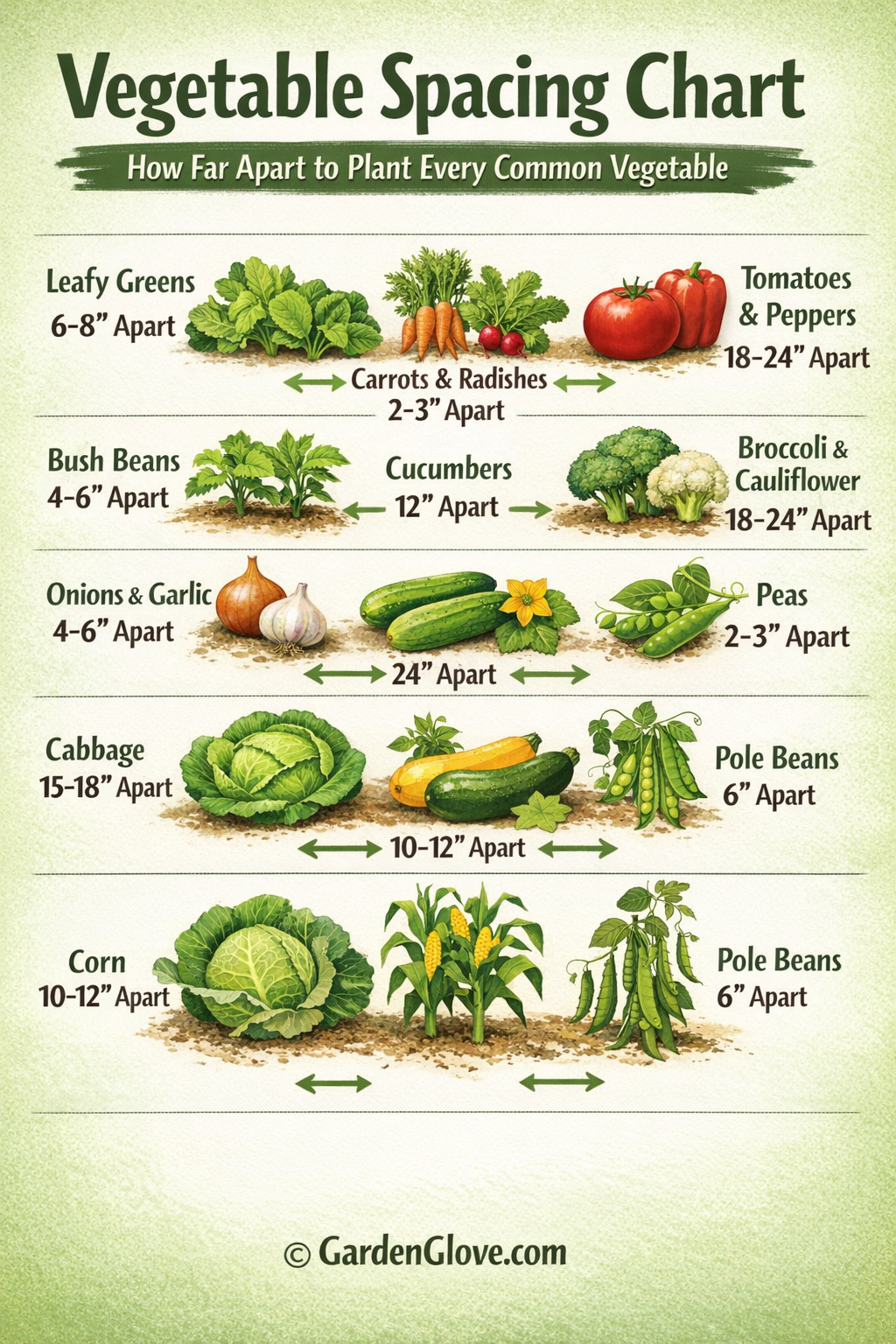
This vegetable spacing chart covers every common garden vegetable with spacing for both traditional in-ground rows and raised bed intensive planting, plus the notes that explain when and why to adjust (this ties directly into overall garden design: /vegetable-garden-layout/).
Why Spacing Matters — The Actual Reason
Every plant spacing recommendation exists to solve one or more of the same three problems.
Competition for resources. Roots extend well beyond the visible above-ground portion of the plant — often two to three times the diameter of the canopy. Plants spaced too closely compete for water and nutrients early.
Light access. Taller plants shade shorter ones, reducing overall productivity.
Airflow. This is the most overlooked factor. Adequate spacing allows leaves to dry and reduces fungal disease risk (this becomes even more important in humid conditions and poor airflow layouts: /vegetable-garden-layout/).
In-Ground vs. Raised Bed Spacing
Seed packets list spacing within rows and between rows. In raised beds, you eliminate row spacing entirely and plant in a grid.
This allows 25–50% more plants in the same space — but only if soil quality and watering are managed properly (see how soil supports intensive planting: /vegetable-garden-soil-prep/).
How to Use This Chart
In-ground row spacing: use both numbers
Raised bed spacing: use plant spacing in all directions
Thinning: essential for direct-seeded crops
Soil quality matters. In poor soil, increase spacing. In rich soil, tighter spacing works (improving soil first is always the better move: /best-garden-soil/).
Vegetable Spacing Chart
(Keep your full chart exactly as written — no changes needed)
Spacing Adjustments Worth Knowing
Humid or Rainy Climates
Increase spacing to improve airflow and reduce fungal disease. This is especially important for crops like tomatoes, cucumbers, squash, and brassicas — all highly sensitive to poor airflow and excess moisture (watering habits also compound this: /vegetable-garden-watering-guide/).
Perennial Herbs
Space on the wider end if plants will overwinter.
Varieties Matter More Than Species
Compact varieties can be planted closer; large heirlooms need full spacing.
Trellis Changes the Calculation
Vertical growing dramatically reduces spacing needs. Trellised cucumbers and beans use far less ground space.
Planning for vertical growth is part of layout design, not an afterthought:
→ /vegetable-garden-layout/
The Most Common Spacing Mistakes
Planting to the label without considering mature size
Not thinning seedlings
Overcrowding large crops
Underestimating perennial herbs
Many of these show up as general garden problems rather than obvious spacing issues:
→ /common-vegetable-garden-mistakes/
Where to Go Next
If spacing feels confusing, start with overall garden design:
→ /vegetable-garden-layout/
If plants are struggling despite correct spacing, soil is usually the issue:
→ /vegetable-garden-soil-prep/
And if growth seems inconsistent, watering is often the hidden factor:
→ /vegetable-garden-watering-guide/
If you’re building your first garden from scratch:
→ /vegetable-gardening-for-beginners/