You walk out to your garden and something feels off. Leaves that were green a few days ago are now fading, yellowing, or dropping altogether.
Yellow leaves are one of the most common problems in gardening—but also one of the most misunderstood.
The challenge isn’t fixing it.
It’s figuring out what’s actually causing it.
If you’re not sure what kind of problem you’re dealing with, start with the Garden Pest Identification Guide.
For a full system to diagnose and fix garden issues, see the Garden Pest Control Guide.
Quick Answer
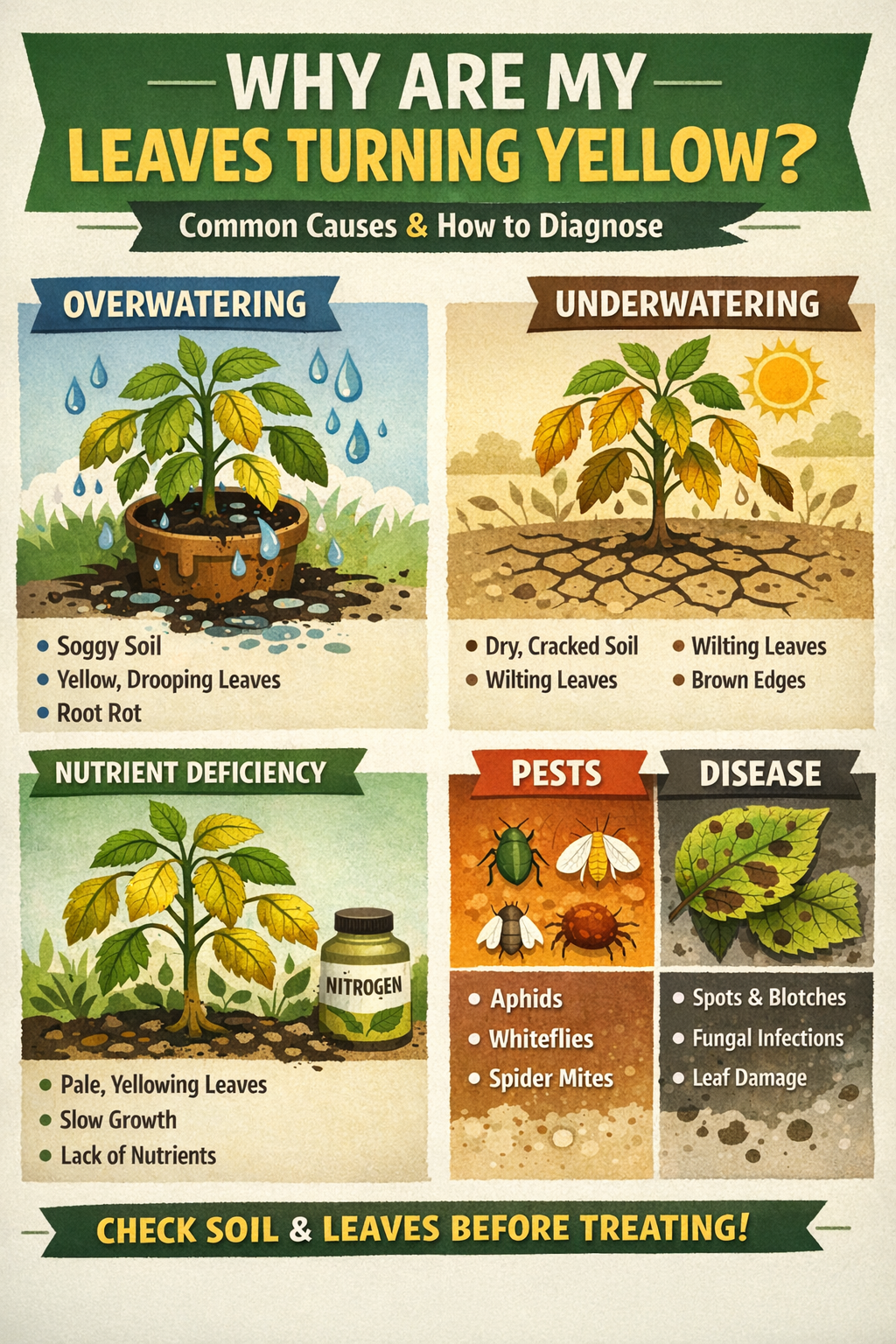
Leaves turn yellow when the plant is under stress. The most common causes are:
- overwatering
- underwatering
- nutrient deficiencies
- pests
- disease
The key is identifying the pattern—not just the color.
How to Diagnose Yellow Leaves (Before You Treat Anything)
Most people make the mistake of treating yellow leaves without diagnosing the cause.
Start with these three questions:
1. Where are the yellow leaves?
- lower leaves → often normal aging or nutrient issues
- upper/new growth → often nutrient deficiency or stress
- entire plant → watering or root problem
2. What does the yellowing look like?
- uniform yellow → watering or nitrogen issue
- yellow with spots → disease
- yellow with damage or distortion → pests
3. How fast is it happening?
- slow yellowing → nutrient or aging
- rapid spread → disease or severe stress
Most Common Causes of Yellow Leaves
1. Overwatering (Most Common Cause)
This is the #1 reason leaves turn yellow.
Too much water:
- suffocates roots
- prevents oxygen uptake
- leads to root rot
Signs:
- soft yellow leaves
- drooping despite wet soil
- slow growth
2. Underwatering
Too little water causes stress and leaf drop.
Signs:
- dry soil
- crispy leaf edges
- yellowing followed by browning
3. Nutrient Deficiency
Plants need nutrients to stay green—especially nitrogen.
Signs:
- pale or uniform yellowing
- older leaves affected first
- slow growth
Improve soil quality with the Organic Soil Amendments Guide.
4. Pests
Sap-feeding pests weaken plants and cause yellowing.
Common culprits:
These pests drain nutrients directly from the plant.
5. Fungal Diseases
Fungal issues often start as spots before spreading.
Signs:
- yellowing with dark patches
- spreading patterns
- leaf damage over time
See Fungal Diseases in the Garden for full diagnosis.
6. Natural Aging
Sometimes yellow leaves are normal.
- older leaves die off as new growth develops
- lower leaves are affected first
If the rest of the plant looks healthy, this is not a problem.
What Actually Works (and What Doesn’t)
What works:
- diagnosing before treating
- checking soil moisture first
- observing patterns over time
What doesn’t:
- guessing and treating randomly
- overcorrecting (watering more or less immediately)
- ignoring early warning signs
Quick Decision Guide
If you’re unsure, use this simple rule:
- wet soil + yellow leaves → overwatering
- dry soil + yellow leaves → underwatering
- insects present → pest issue
- spots or patterns → disease
How to Prevent Yellow Leaves
Prevention is about stability.
- water consistently (not too much, not too little)
- improve soil structure
- monitor plants regularly
- avoid overcrowding
Build a stronger foundation with the Vegetable Gardening Guide.
Common Mistakes
- reacting too quickly without diagnosing
- watering more when the issue is already overwatering
- ignoring pests until damage spreads
- assuming all yellow leaves are the same problem
Where to Go Next
If you’ve identified the cause, go deeper:
- Pest issues → Garden Pest Control Guide
- Identification help → Garden Pest Identification Guide
- Disease problems → Fungal Diseases in the Garden
For hands-on work, protect your hands with Best Garden Gloves.
Conclusion
Yellow leaves are not the problem—they’re the signal.
Once you understand what your plant is telling you, the fix becomes straightforward.
The key is slowing down just enough to diagnose correctly before you act.