Vegetable gardening isn’t complicated, but it is layered.
Most people struggle not because they lack effort, but because one or two foundational pieces are off. Soil isn’t built properly. Timing is slightly wrong. Spacing gets ignored. Those small mistakes compound into weak plants and disappointing harvests.
This guide gives you a clear path through the fundamentals so your garden actually produces, season after season.
If you’re brand new, start here:
👉 Vegetable Gardening for Beginners
For the most consistent results with soil, layout, and watering, this is the most complete system:
👉 Raised Bed Gardening Guide
Start With the Foundation (Most Gardens Fail Here)
Before you think about what to plant, you need to understand what you’re planting into.
Soil determines everything:
- how roots develop
- how water moves
- how nutrients are absorbed
If your soil isn’t right, nothing else fully works.
Start here:
👉 Vegetable Garden Soil Prep
Then build long-term soil quality:
👉 Best Garden Soil
And dial in nutrient availability:
👉 Soil pH Guide
Planning Your Garden (Layout, Space, and Structure)
Once your soil is in place, layout becomes the next limiting factor.
Layout determines:
- sun exposure
- airflow
- space efficiency
- ease of maintenance
If you’re building from scratch:
👉 Vegetable Garden Layout
For maximum control and consistency:
👉 Raised Bed Gardening Guide
To avoid overcrowding:
👉 Vegetable Spacing Chart
When to Plant (Timing Is Half the Battle)
You can do everything else right and still struggle if timing is off.
Vegetables fall into two main categories:
- cool-season crops (spring and fall)
- warm-season crops (after frost)
If you’re unsure about your planting window:
👉 When to Plant Vegetables
For quick early wins:
👉 Fast Growing Vegetables
Watering and Maintenance (Where Most Problems Start)
Watering is one of the most common failure points in vegetable gardening.
Too much water leads to weak roots and disease. Too little leads to stress and poor yields.
The goal is consistent moisture based on soil type and plant stage, not constant watering.
Use this guide to dial it in:
👉 Vegetable Garden Watering Guide
Avoiding Common Mistakes (This Saves You Months)
Most gardening problems follow predictable patterns.
- planting too close
- ignoring soil quality
- watering inconsistently
- skipping crop rotation
Fixing these early changes everything:
👉 Common Vegetable Garden Mistakes
Raised Beds vs In-Ground (Choosing the Right Setup)
Raised beds offer more control over soil, drainage, and consistency.
They simplify many of the hardest parts of gardening, but require proper setup.
Start here:
👉 Raised Bed Gardening Guide
Get the soil right:
👉 Raised Bed Soil Mix
Plan your beds effectively:
👉 Raised Bed Layout Planner
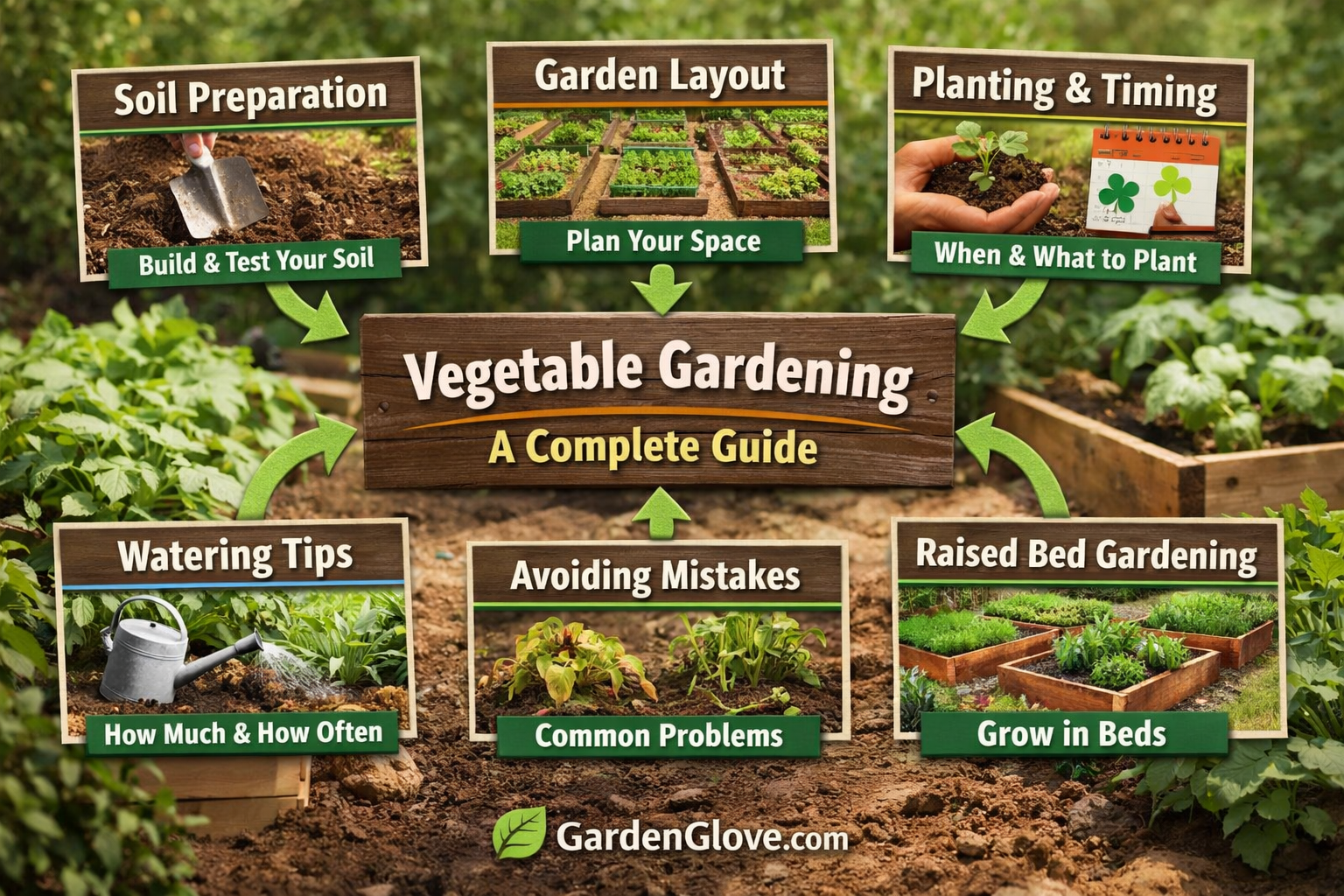
How Everything Connects
Vegetable gardening works when a few key systems align:
- soil quality
- planting timing
- spacing
- watering
- layout
When those are dialed in, your garden becomes predictable instead of frustrating.
Where to Go Next
- Vegetable Gardening for Beginners
- Vegetable Garden Soil Prep
- Vegetable Garden Layout
- Vegetable Garden Watering Guide
- Raised Bed Gardening Guide
Vegetable gardening rewards small improvements more than big changes. Get the fundamentals right, and everything else builds on top of it.