If your garden feels crowded or underperforming, the problem is often not space—it’s how that space is used.
Vertical vegetable gardening allows you to grow upward instead of outward, improving airflow, reducing disease, and increasing production.
If you’re still setting up your garden overall, start with the Vegetable Gardening Guide.
—Quick Answer
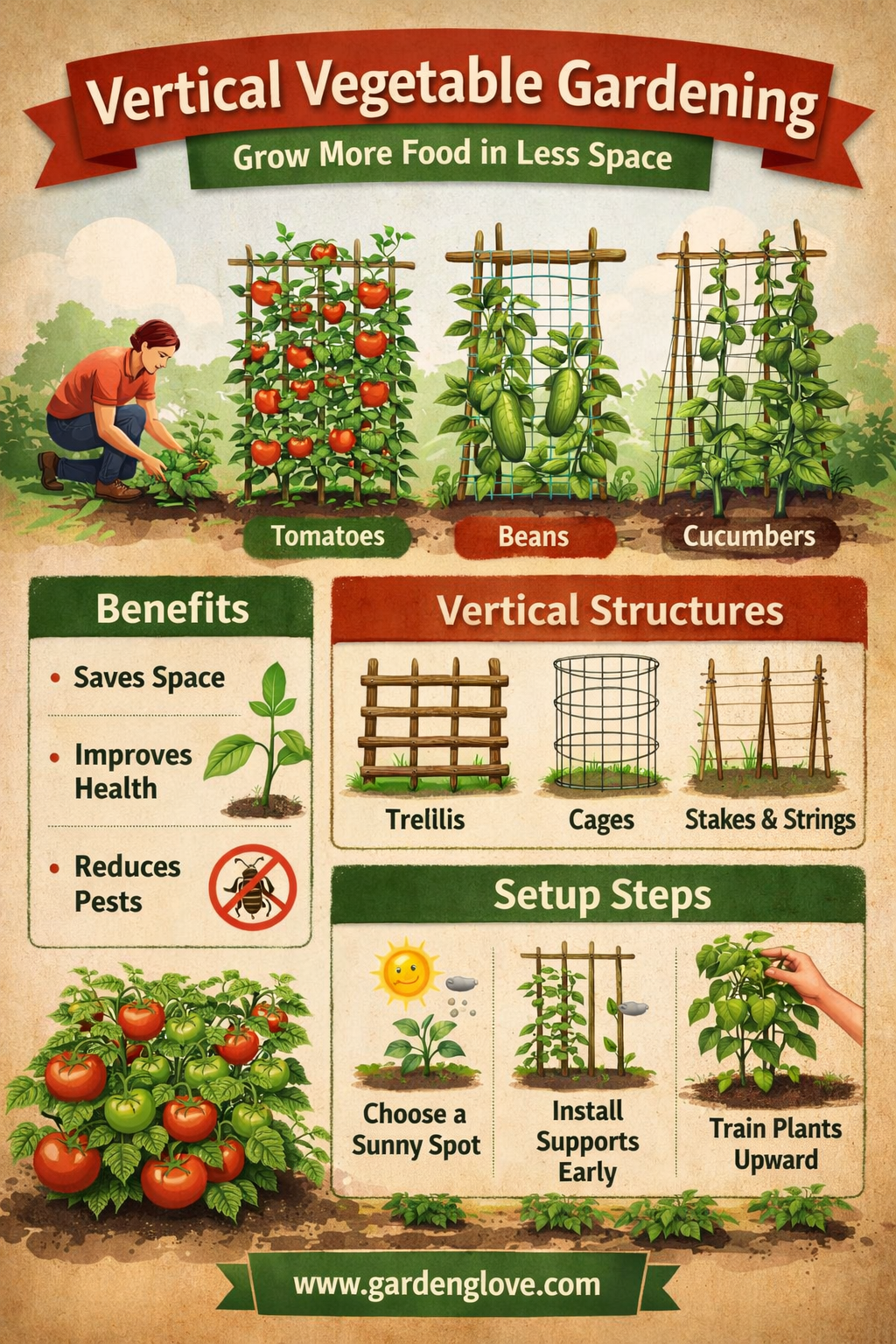
Vertical vegetable gardening works by supporting plants upward using structures like trellises, cages, or stakes. This:
- saves space
- improves plant health
- reduces pest and disease pressure
Best Crops for Vertical Gardening
- tomatoes
- cucumbers
- beans
- peas
- squash (with support)
Why Vertical Gardening Works
Improved Airflow
Plants dry faster, reducing fungal problems. See Fungal Diseases in the Garden.
Better Light Exposure
Leaves receive more consistent sunlight, improving growth.
Easier Pest Management
Elevated plants are easier to inspect and treat. Use the Garden Pest Identification Guide if needed.
—Types of Vertical Supports
- trellises
- cages
- stakes
- string systems
Choose based on plant weight and growth habit.
—How to Set Up a Vertical Garden
1. Choose the Right Location
Ensure full sun and stable ground.
2. Install Supports Early
Set structures before plants grow large.
3. Train Plants Upward
Guide stems regularly to prevent damage.
4. Maintain Consistent Watering
Vertical systems can dry faster. See the Vegetable Garden Watering Guide.
—Common Mistakes
- waiting too long to install supports
- using weak structures
- not pruning when needed
- ignoring plant weight as it grows
Soil and Nutrition Considerations
Healthy soil supports stronger vertical growth. Improve your base with the Organic Soil Amendments Guide.
—Where Vertical Gardening Fits in Your System
Vertical gardening works especially well in raised beds. See Raised Bed Gardening Guide for full setup.
It also reduces pest pressure by improving visibility and airflow, supporting your overall pest control strategy.
—Where to Go Next
Build your full system with the Vegetable Gardening Guide.
For pest issues, use the Garden Pest Control Guide.
For hands-on work, see Best Garden Gloves.
—Conclusion
Vertical vegetable gardening is one of the simplest ways to increase production without expanding your garden. By growing upward, you improve plant health, reduce disease, and make your entire system easier to manage.
{
“@context”: “https://schema.org”,
“@type”: “Article”,
“headline”: “Vertical Vegetable Gardening: How to Grow More Food in Less Space”,
“description”: “Learn vertical vegetable gardening techniques to grow more food in less space with simple, effective methods.”,
“author”: {
“@type”: “Person”,
“name”: “GardenGlove”
},
“publisher”: {
“@type”: “Organization”,
“name”: “GardenGlove”
}
}