
Broccoli, cabbage, kale, and cauliflower are productive, reliable crops — but they all share one problem: they attract caterpillars.
If your brassicas look like they’ve been shot through with holes by midseason, cabbage worms and cabbage loopers are usually the cause.
If you are not fully sure what you’re seeing:
👉 Garden Pest Identification Guide
For the full control system:
👉 Garden Pest Control Guide
—
Identifying the Two Pests
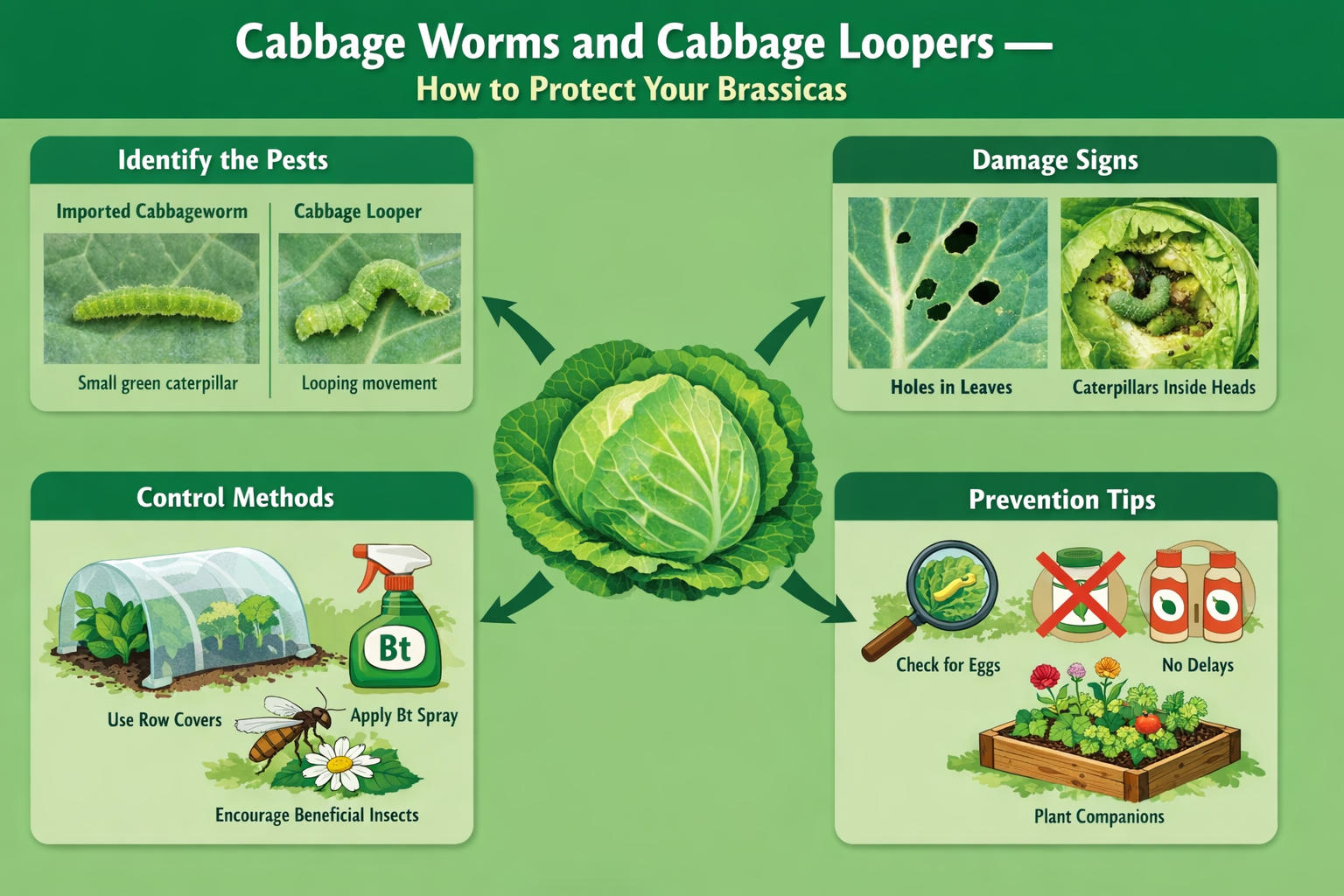
Imported Cabbageworm
The imported cabbageworm is the larva of the cabbage white butterfly — the small white butterfly you see constantly flying through gardens.
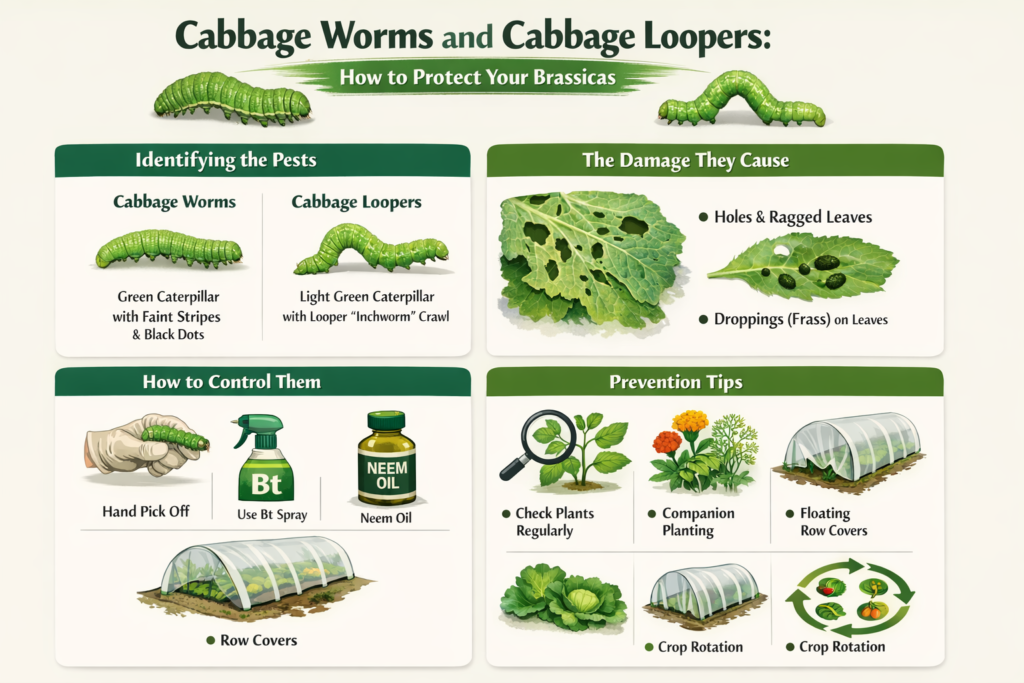
The caterpillar is velvety green with a faint stripe and blends almost perfectly with leaves.
—
Cabbage Looper
Cabbage loopers are pale green caterpillars that move in a looping motion. They grow larger than cabbageworms and are often easier to spot once mature.
In practice, both pests cause similar damage and are treated the same way.
—
Damage and Timing
- irregular holes across leaves
- feeding on undersides early
- damage inside cabbage or cauliflower heads
- frass contamination in harvestable crops
Peak pressure typically occurs mid to late season, with multiple generations per year.
—
Plants Most at Risk
- cabbage
- broccoli
- cauliflower
- kale
- Brussels sprouts
- kohlrabi
—
How to Control Cabbage Worms and Loopers
1. Row Cover (Best Method)
Row cover installed at planting prevents egg-laying entirely. This is the most effective method.
Secure edges fully and leave in place all season.
—
2. Inspect and Remove Eggs
Check leaf undersides every few days. Remove small yellow eggs before they hatch.
—
3. Use Bt for Active Caterpillars
Bacillus thuringiensis (Bt) is highly effective and targets caterpillars specifically.
- apply to all leaf surfaces
- target small larvae
- reapply every 5–7 days
- reapply after rain
For broader strategy:
👉 Organic Garden Pest Control
—
4. Support Natural Predators
Parasitic wasps and beneficial insects help reduce populations naturally.
Support them with flowering plants:
—
Why These Pests Spread
Butterflies lay eggs directly on host plants. Without barriers, infestations can build quickly across multiple generations.
—
What to Avoid
- delaying row cover installation
- inconsistent Bt application
- ignoring early egg stages
—
Prevention Summary
- install row cover at transplanting
- inspect regularly
- apply Bt early
- support beneficial insects
Strengthen your system here:
👉 Vegetable Gardening Guide
—
Quick Reference
- holes across leaves → caterpillar feeding
- underside feeding → early stage larvae
- head damage → advanced infestation
- butterflies present → egg-laying underway
—