Your squash plant looked fine yesterday. Today it’s wilted, collapsed, and dying — even though the soil is still moist.
This is one of the most frustrating problems in the garden, and it’s almost always caused by squash vine borers.
If you are not fully sure what’s causing the damage:
👉 Garden Pest Identification Guide
For the full control system:
👉 Garden Pest Control Guide
What Squash Vine Borers Are
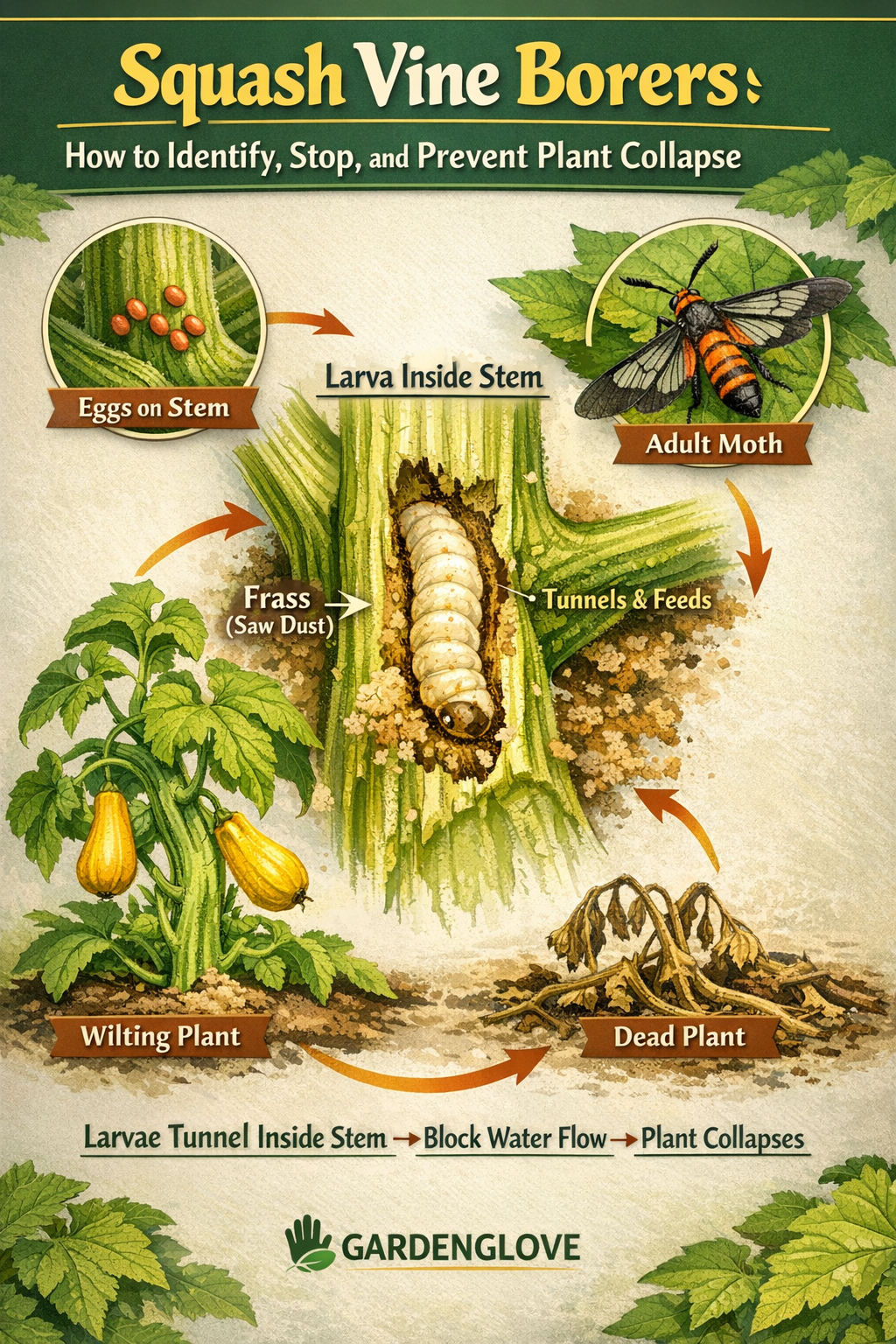
Squash vine borers are the larvae of a clear-wing moth. Unlike most pests, they don’t feed on leaves — they tunnel inside the stem of squash plants.
Once inside, they disrupt water flow, causing sudden wilting and plant collapse.
—
Signs of Squash Vine Borer Damage
- sudden wilting despite moist soil
- holes at the base of the stem
- sawdust-like frass near entry point
- yellowing and rapid plant collapse
—
Plants Most at Risk
- zucchini
- yellow squash
- pumpkins
- butternut squash (less susceptible)
—
Why Squash Vine Borers Are So Destructive
Unlike surface pests, borers live inside the plant, making them difficult to detect and treat.
By the time symptoms appear, the damage is already severe.
—
How to Get Rid of Squash Vine Borers
1. Cut Them Out (Emergency Method)
Carefully slice the stem lengthwise and remove the larva. Cover the stem with soil to encourage recovery.
2. Cover the Base of the Plant
Mound soil over nodes to encourage additional root growth and reduce damage impact.
3. Use Row Covers Early
Prevent egg-laying by covering plants at planting time.
4. Monitor for Eggs
Look for small brown eggs near the base of stems and remove them early.
5. Use Preventive Sprays
Neem oil can help deter egg-laying:
For full system strategy:
👉 Organic Garden Pest Control
—
What to Avoid
Once larvae are inside the plant, sprays are ineffective. Prevention is far more effective than treatment.
—
How to Prevent Squash Vine Borers
- use row covers early
- rotate crops yearly
- delay planting until after peak egg-laying
- remove and destroy infested plants
- clean up garden debris at season end
Improve plant health here:
👉 Vegetable Gardening Guide
—
Quick Reference
- wilting plant → internal damage
- hole at base → entry point
- sawdust residue → active larva
- rapid collapse → advanced infestation
—