Most pest problems do not start with a catastrophic infestation. They start with a few damaged leaves, sticky residue, unexplained holes, faded growth, or a plant that suddenly loses momentum.
The problem is that many pests create overlapping symptoms. If you treat the wrong thing—or treat the right thing too late—you waste time, stress the plant, and often make the outbreak harder to control.
This guide is the central framework for garden pest control on GardenGlove. If you are not yet sure what is damaging your plants, begin with the Garden Pest Identification Guide. If you already know the pest and want a natural treatment framework, the sections below will help you choose the right next step.
Quick Answer
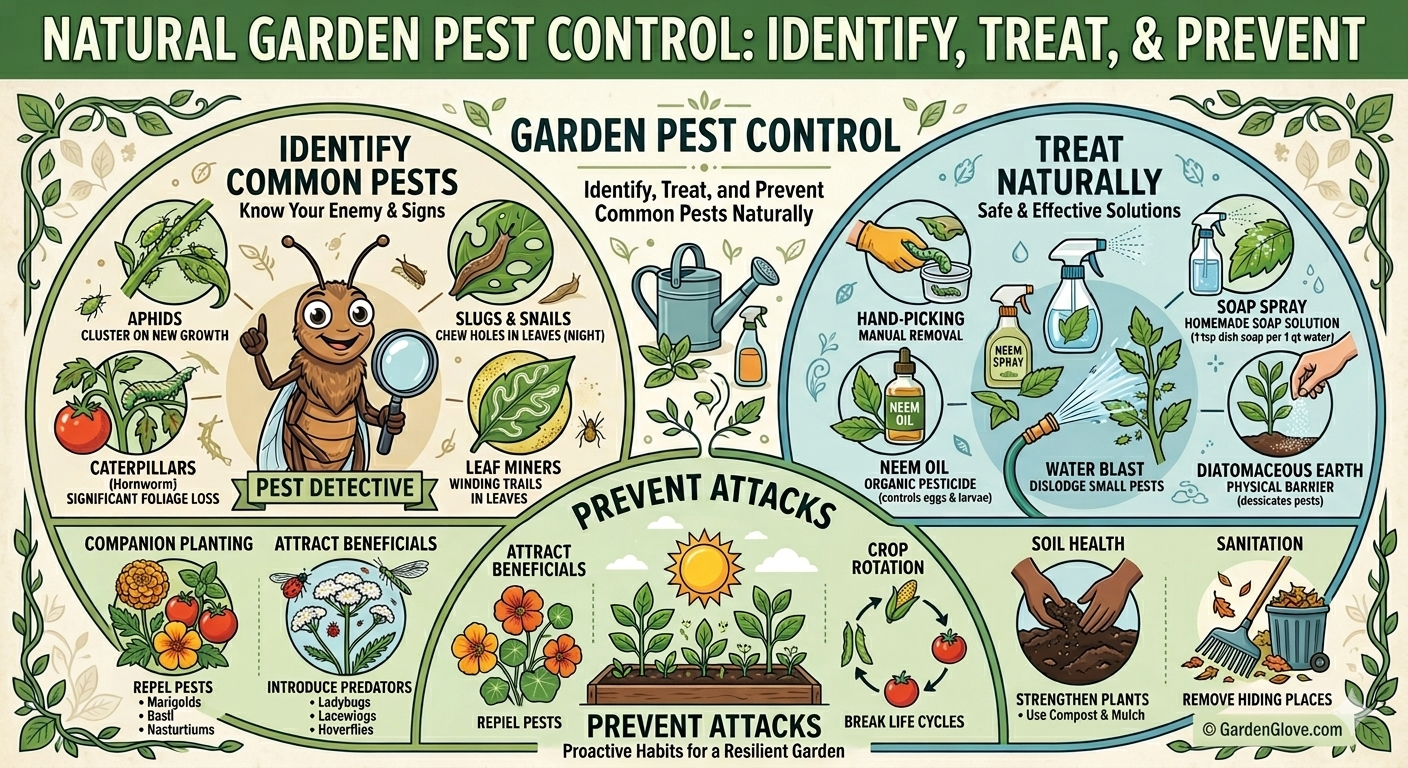
Good garden pest control follows the same sequence almost every time:
- identify the pest correctly
- judge the severity of the outbreak
- reduce the population quickly
- apply the right treatment consistently
- fix the conditions that made the problem easier to establish
The biggest mistake is treating every pest the same way. Aphids, spider mites, whiteflies, hornworms, slugs, and beetles all behave differently, so the control method has to match the pest.
Start Here: Identify the Damage Pattern
If you do not know what pest you have, start with symptom pattern first.
- Sticky leaves, curled growth, or clusters of soft-bodied insects often point to Aphids on Plants or Whiteflies on Plants.
- Pale stippling, faded leaves, and fine webbing usually point to Spider Mites.
- Large missing leaf sections on brassicas often point to Cabbage Worms and Cabbage Loopers.
- Sudden collapse of squash plants points strongly toward Squash Vine Borers.
- Chewed tomato foliage with large droppings usually means Tomato Hornworms.
- Skeletonized leaves and metallic beetles suggest Japanese Beetles.
- Irregular chewing and slime trails point toward Slugs in the Garden.
If you want a dedicated diagnostic guide before treating anything, use the Garden Pest Identification Guide.
The 5-Part Garden Pest Control System
1. Confirm the Pest Before You Spray
Different pests require different control logic. Spider mites thrive in hot, dry stress. Aphids often explode on soft, overfed growth. Slugs prefer moisture and cover. Hornworms are large enough to hand-pick. Whiteflies rebound if treatments are inconsistent.
That is why identification comes first. Treating by symptom alone often fails.
2. Reduce the Population Fast
Before using any spray, cut the pressure down physically.
- remove heavily infested leaves
- blast soft-bodied pests with water
- hand-pick large caterpillars and beetles
- use traps only where they genuinely help monitor or reduce adults
This step matters because treatments work better when the infestation is already knocked back.
3. Use the Right Treatment for the Right Pest
Most natural garden pest control comes down to choosing the correct treatment category.
- For soft-bodied pests like aphids and whiteflies, start with the Insecticidal Soap Guide.
- For repeated suppression across several pest types, use the Neem Oil for Plants guide.
- For the broader framework behind natural methods, barriers, and beneficials, continue to Organic Garden Pest Control.
One of the biggest execution mistakes is rotating through random products without consistency. The method matters less than steady follow-through.
4. Protect Plant Health While You Treat
Pests rarely exist in isolation. Water stress, poor fertility, weak soil structure, overcrowding, and unmanaged bed conditions all raise plant vulnerability.
If your vegetables are generally underperforming, fix the system around them with the Vegetable Gardening guide. If irrigation is inconsistent, correct that with the Vegetable Garden Watering Guide. If fertility is pushing too much soft growth or plant vigor is weak, revisit Vegetable Garden Soil Prep and the Organic Soil Amendments Guide.
5. Prevent Rebound
Most gardeners do enough to get temporary improvement, then stop. That is why the pest comes back.
Prevention usually means:
- catching the next generation early
- checking nearby plants
- avoiding overfeeding
- keeping watering steady
- protecting beneficial insects
- removing the environmental advantage the pest was exploiting
Common Garden Pests and Where to Go Next
Sap-Feeding Pests
These pests weaken plants by feeding on sap and often create sticky residue, curled growth, or faded leaves.
These pages work best together. If you are comparing similar symptoms, move between them rather than treating blindly.
Chewing Pests
These pests remove leaf tissue, tunnel into stems, or attack fruits directly.
- Tomato Hornworms
- Cabbage Worms and Cabbage Loopers
- Squash Vine Borers
- Japanese Beetles
- Slugs in the Garden
Disease Overlap That Looks Like Pest Damage
Not every damaged plant has an insect problem. Some symptoms are disease-driven or are made worse by environmental stress.
If you are not sure whether you are looking at pest damage, disease, or cultural stress, return to the Garden Pest Identification Guide.
Natural Treatment Methods That Actually Matter
Insecticidal Soap
Best for direct contact control of soft-bodied pests. It works well, but only when coverage is thorough and repeat applications are timed correctly. Start with the Insecticidal Soap Guide.
Neem Oil
Useful for suppressing feeding and reproduction across several pests and some disease contexts. It is more about interruption than instant knockdown. Use the Neem Oil for Plants guide for timing and application.
Organic Multi-Method Control
If you want the broader philosophy—barriers, beneficials, plant health, monitoring, and treatment sequencing—go to Organic Garden Pest Control.
How Other Clusters Affect Pest Pressure
Vegetables
A large share of your pest problems will show up in vegetables first. Crop layout, watering, stress, spacing, and timing all influence how vulnerable the garden becomes. The best starting pages here are Vegetable Gardening, Vegetable Garden Layout, and Common Vegetable Garden Mistakes.
Garden Soil
Plants grown in poorly managed soil are easier targets. Fertility imbalance, poor drainage, and weak root systems do not directly “cause” pests, but they do weaken resistance and recovery. Useful related pages include Best Garden Soil, Soil pH Guide, and Organic Soil Amendments Guide.
Raised Beds
Raised beds change airflow, watering dynamics, crop density, and pest pressure. If your main garden runs on raised beds, the most relevant crossover page is Raised Bed Pest Control. You may also want Raised Bed Irrigation and Raised Bed Mulching.
Common Mistakes That Keep Pest Problems Going
- treating before confirming the pest
- using one spray once and expecting full control
- ignoring plant stress and only focusing on the insect
- killing beneficial insects with broad-spectrum treatments
- failing to inspect nearby plants after the first outbreak
- waiting until damage is severe before acting
What to Do Next
If you still need to identify the problem, go to the Garden Pest Identification Guide. If you want the natural treatment framework in one place, continue to Organic Garden Pest Control.
If you already know the pest, use the specific guides linked above and work from the individual page rather than applying general advice to every infestation.
And if you are repeatedly handling damaged foliage, spraying, pruning out infested growth, or checking plants by hand, a durable pair from the 10 Best Garden Gloves for Comfort, Grip, and Durability is a practical upgrade worth having.
Conclusion
Garden pest control works best when you stop thinking in terms of single products and start thinking in terms of systems.
Correct identification, fast population reduction, targeted treatment, and stronger plant health will solve most outbreaks more reliably than chasing every symptom with a new spray.
That is the framework that actually holds up over a season.