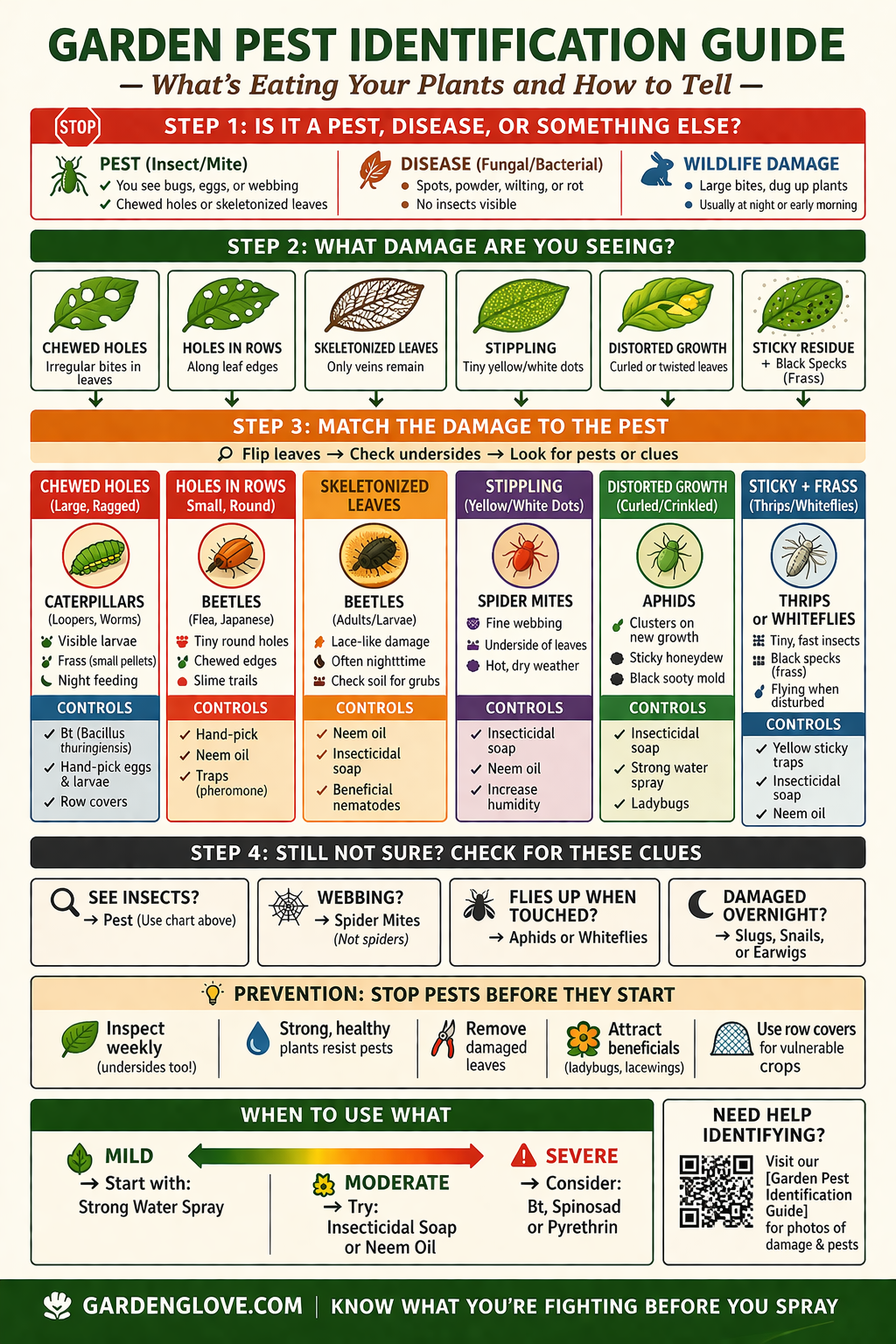
Garden pest identification is the first step to solving almost any problem in your garden. You walk out and something is off. Leaves are curling, turning yellow, developing spots, or disappearing altogether. Sometimes there are visible insects. Sometimes there aren’t.
The hardest part of pest control is not treatment—it’s identification. If you misidentify the problem, the solution usually fails.
This guide focuses on practical garden pest identification using visible damage patterns, so you can move quickly from symptoms to the right solution.
This guide helps you identify what is damaging your plants based on visible symptoms, patterns, and timing. Once you’ve narrowed it down, you can move directly to the right treatment.
Quick Answer
To identify garden pests quickly, focus on three things:
- what the damage looks like
- where it appears on the plant
- how fast it is spreading
These three signals are more reliable than trying to recognize the insect itself.
Start With the Damage Pattern
Sticky Leaves, Curled Growth, or Clusters of Tiny Insects
This usually points to sap-feeding pests. The most common are Aphids on Plants and Whiteflies on Plants.
Look for:
- sticky residue (honeydew)
- ants moving up and down stems
- clusters on new growth
- distorted or curled leaves
Faded Leaves, Speckling, or Fine Webbing
If leaves look dull, dusty, or stippled with tiny pale dots, check for Spider Mites.
Look for:
- tiny moving dots under leaves
- fine webbing
- damage that spreads quickly in hot, dry conditions
Large Holes or Missing Leaf Sections
If pieces of the leaf are missing entirely, you’re dealing with chewing pests.
Common culprits include:
Sudden Wilting or Plant Collapse
If a healthy plant suddenly wilts or collapses, especially squash, check for Squash Vine Borers.
This type of damage is often internal, so you may not see the pest immediately.
Irregular Chewing and Slime Trails
If leaves are chewed unevenly and you see slime trails, especially in damp conditions, you are likely dealing with Slugs in the Garden.
Spots, Mold, or Disease-Like Symptoms
Not all damage is caused by insects. If you see powdery coatings, spreading spots, or fungal patterns, review Fungal Diseases in the Garden or Powdery Mildew Treatment.
How to Confirm What You’re Seeing
If you are unsure between two possibilities, use quick confirmation methods:
- tap leaves over white paper to check for moving mites
- inspect leaf undersides for eggs or clusters
- look for webbing or residue
- check multiple plants, not just one
Patterns across the garden matter more than a single plant.
Match the Pest to the Right Treatment
Once you’ve identified the likely pest, move directly to the correct treatment path.
- For soft-bodied pests, start with the Insecticidal Soap Guide
- For repeated infestations, use the Neem Oil for Plants guide
- For a full natural system, follow Organic Garden Pest Control
For the full framework that ties identification and treatment together, go to the Garden Pest Control Guide.
Why Identification Matters More Than Treatment
Many pests create similar symptoms. Treating the wrong problem wastes time and often stresses the plant further.
For example:
- spider mites and nutrient issues can both cause pale leaves
- aphids and whiteflies both create sticky residue
- fungal diseases can mimic pest damage patterns
That’s why identifying the cause first is more effective than reacting quickly with the wrong solution.
How Other Factors Influence Pest Problems
Vegetable Gardening Conditions
Many pest problems start with plant stress. Weak plants attract more pressure and recover more slowly. If your garden overall needs improvement, use the Vegetable Gardening Guide.
Watering and Stress
Inconsistent watering weakens plants and makes them more vulnerable. Correcting this often reduces pest severity. See the Vegetable Garden Watering Guide.
Soil and Growth Patterns
Over-fertilized or poorly structured soil can create soft growth that attracts pests. Review Vegetable Garden Soil Prep and Organic Soil Amendments Guide if your plants seem overly tender or unbalanced.
Raised Bed Systems
Raised beds change airflow, density, and watering patterns. If pests are recurring in beds specifically, see Raised Bed Pest Control.
Common Identification Mistakes
- treating before confirming the pest
- looking only at the top of leaves
- ignoring early-stage damage
- assuming all pests behave the same
- missing nearby plants that show earlier symptoms
Where to Go Next
If you’ve identified the pest, move to the specific guide linked above and follow that treatment directly.
If you want the full system approach, go to the Garden Pest Control Guide. For natural treatment methods across multiple pests, use Organic Garden Pest Control.
If you’re handling infested plants regularly, a durable pair from the 10 Best Garden Gloves for Comfort, Grip, and Durability can make the process easier.
Conclusion
Most pest problems become manageable once you correctly identify what you’re dealing with.
Instead of reacting to symptoms, use the patterns in your garden to guide your decisions. Once the cause is clear, the solution becomes much more predictable.