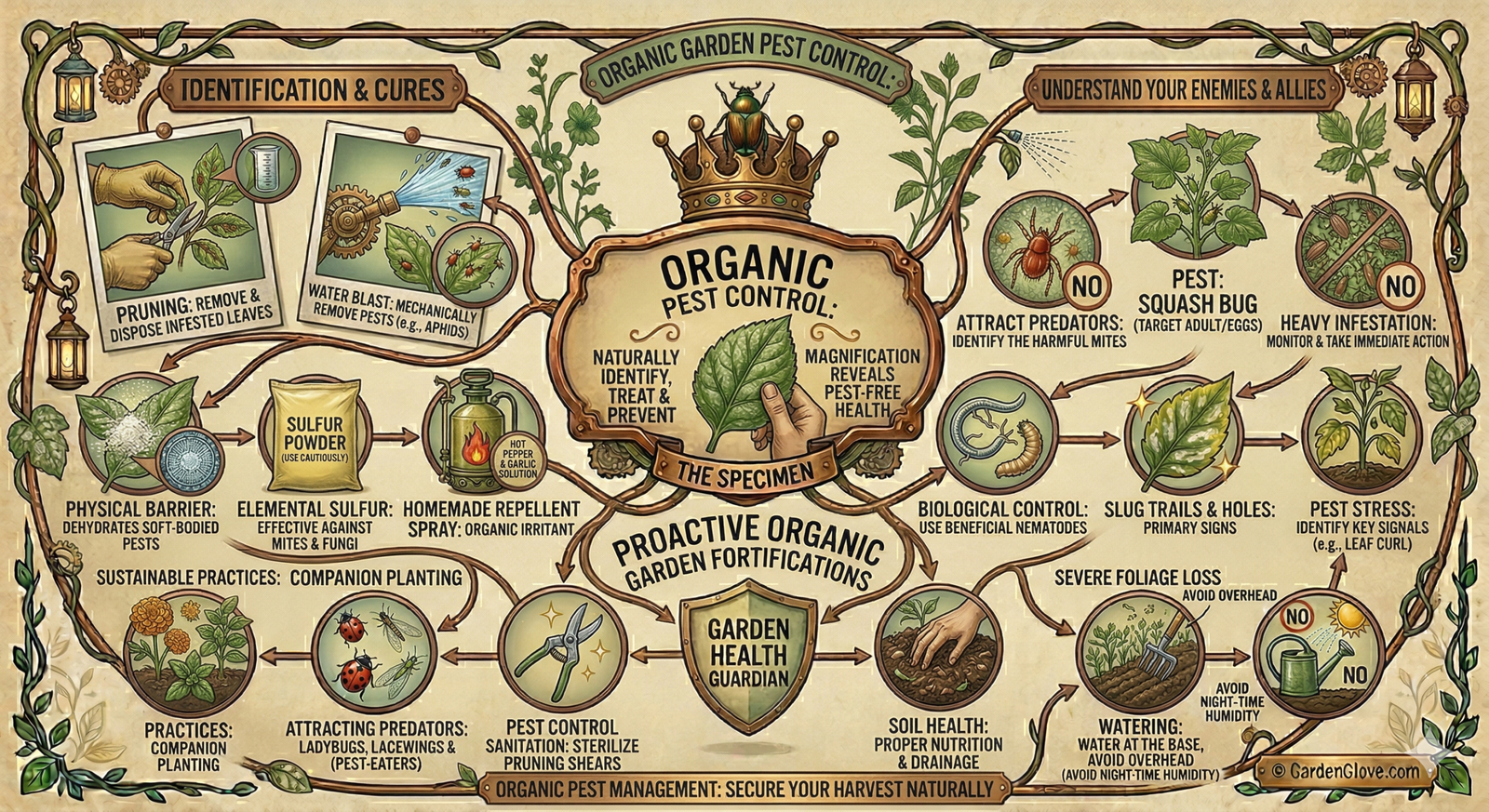
Organic garden pest control works best when you treat it as a system, not a single product. Most gardeners want to avoid harsh chemicals, but still need reliable results.
The challenge is that natural methods are often used inconsistently or applied without matching them to the right pest.
If you are not yet sure what pest you are dealing with, start with the Garden Pest Identification Guide. If you already know the pest and want the full framework behind treatment, the Garden Pest Control Guide connects everything together.
Quick Answer
Organic garden pest control works when you:
- identify the pest correctly
- reduce the population first
- apply the right natural treatment
- repeat consistently
- fix the conditions that caused the problem
Most failures happen because one of these steps is skipped.
Core Organic Garden Pest Control Methods
Insecticidal Soap
Insecticidal soap is one of the most effective tools for soft-bodied pests like aphids and whiteflies. It works on contact, which means coverage matters.
Use it when dealing with:
Follow the full process in the Insecticidal Soap Guide.
Neem Oil
Neem oil is a core tool in organic garden pest control because it interferes with feeding and reproduction across multiple pests.
Use it when infestations persist or return quickly. For proper use, follow the Neem Oil for Plants guide.
Water Sprays
A strong spray of water removes pests and disrupts colonies.
This works best when repeated consistently.
Manual Removal
Some pests are easier to remove directly.
Barriers and Physical Controls
Barriers help prevent pests from reaching plants.
See Raised Bed Pest Control for practical setups.
Beneficial Insects
Beneficial insects support long-term control after populations are reduced.
Matching the Method to the Pest
Organic garden pest control works best when the method fits the pest.
- sap-feeding pests → soap + neem + water
- mites → water + neem (Spider Mites)
- chewing pests → removal + barriers
If unsure, return to the Garden Pest Identification Guide.
Why Organic Pest Control Sometimes Fails
- treating only once
- missing leaf undersides
- using the wrong method
- stopping too early
The Role of Plant Health
Healthy plants are more resistant and recover faster. Organic garden pest control becomes much easier when plants are not under stress.
Start with the Vegetable Gardening Guide.
Common Mistakes
- expecting one treatment to solve everything
- switching methods too quickly
- ignoring environmental conditions
Where to Go Next
For the full system, go to the Garden Pest Control Guide.
For identification, use the Garden Pest Identification Guide.
For hands-on work, see Best Garden Gloves.
Conclusion
Organic garden pest control is not about finding one perfect solution. It is about applying the right method consistently until the pest cycle is broken.